Today I'm mostly ranting about potential parental leave reforms at Labour Uncut. If that sounds half as overwhelmingly exciting to you as it does to me click here: http://labour-uncut.co.uk/2011/05/17/business-is-no-excuse-for-prejudice/
Showing posts with label labour uncut. Show all posts
Tuesday, 17 May 2011
"Business" is no excuse for prejudice
Today I'm mostly ranting about potential parental leave reforms at Labour Uncut. If that sounds half as overwhelmingly exciting to you as it does to me click here: http://labour-uncut.co.uk/2011/05/17/business-is-no-excuse-for-prejudice/
Labels:
equality,
feminism,
heternormativity,
labour uncut,
politics,
women
Friday, 29 April 2011
The so-called Liberal Democrats need more discrimination
The most important thing happening today (wedding? what wedding?) is clearly this article, up on Labour Uncut: http://labour-uncut.co.uk/2011/04/29/the-so-called-liberal-democrats-need-more-discrimination/
Less of this please
Labels:
anti-feminism,
equality,
feminism,
labour uncut,
politics,
women
Wednesday, 13 April 2011
What values should govern, what’s the use of higher education, and when can we start liking Nick Clegg again?
Originally published at Labour Uncut: http://labour-uncut.co.uk/2011/04/13/what-values-should-govern-what’s-the-use-of-higher-education-and-when-can-we-start-liking-nick-clegg-again
From Urban Dictionary: 'To Clegg is to betray everything you once stood for in a dash of opportunism and stupidity.'
The Liberal Democrat spin machine has gone into overdrive during the last week. Nick Clegg’s sympathetically candid interview in the New Statesman seems almost like the beginning of a public rehabilitation. The message seems to be that we’ve torn him down, and now, in time honoured media tradition, it’s time to build him back up again. Even the Telegraph’s take on the interview, beneath with the ostensibly mocking headline, “I cry to music and even my sons ask why everybody hates me”, inspires a quick flicker of – what is it – guilt?
The question arises, are we justified in continuing to hate everything Nick Clegg represents, or have we turned into massive playground bullies, continuing to flush our victim’s head down the toilet?
Almost a year into coalition government, it is still worth holding onto the memory of those Liberal Democrat manifesto pledges, embodied by Nick Clegg, that led to a barrage of student protests, vociferous journalistic bile, effigies on bonfires, and his own set of entries in Urban Dictionary. Nobody who can understand that £27,000 is a ludicrous amount of money for three years of lectures and library access will forget the tuition fees betrayal in a hurry.
On the other hand, the commodification of higher education wasn’t cooked up solely by this government. The infamous, idiotic Browne report, leading to the decision to officially mandate university courses solely according to the market-governing value, economic “use”, was commissioned by Labour. It was Peter Mandelson’s hand on the helm when the initial push came for the reconceptualising of degrees as useful business contracts meted out to student-customers paying through their tightly clenched teeth for the privilege. “Listen, professor, I’m paying for this degree: now explain to me how this ‘Beauvoir and existentialism’ essay will be directly relevant to changing demands of the job market (none of this ‘transferable skills’ bullshit), or I’m buying a different course”.
Most damagingly, it was under Labour that the higher education department was moved into the business department, foreshadowing this government’s “reforms”. Accusing the Tories and Lib Dems of acting “ideologically” is one of Labour’s better catch-phrases of the moment. As Dominic Lawson points out in the Independent, most people believe that acting according to ideology is a bad thing. But Lawson is wrong to argue that Labour’s assertion: “the Tory cuts are ideological”, is an accusation simply of Thatcherism, or one borne out of jealousy. Rather, it is the quite fair charge that the Thatcher-esque policies of the Tory-Lib Dem government are being enacted dogmatically, that they are not supported by the available evidence.
That is why it is important that we continue to fight for higher education to be seen as good for other reasons than economic utility. Without graduates in the arts, humanities, and social sciences, we will not know what it is to speak of other values than use; we will not know anything of the philosophy behind politics, nor of politics itself. We will not know why it is important that we should know these things. Without an understanding of these ideas, the ascendant ideology of economic utility will go unchallenged.
We have already seen a concentrated assault on the idea that as far as governing values go, if you can’t easily quantify it, you should get rid of it. If use is the only value we admit of, we will not know that it is just one black and white, up and down, right and wrong field of thought – in a politics that should rightfully admit of grey.
Tempting though it is to hate Nick Clegg’s guts until the end of time, the reality is that he probably isn’t the arch-villain we would like to think he is (that sentence was very difficult to type). He did deliberately canvass the student vote on a policy that he never intended to keep, but he probably isn’t completely evil. Like Darth Vader, there might be some good left deep inside him, in spite of the fact that he would condone building a massive Death Star with which to destroy higher education, the welfare state, the public sector, our rich artistic culture, and everything else that is valuable.
Yet, somewhere, there must be some good in him, after all, he does cry alone in his room while listening to music, and what Radiohead fan doesn’t understand that?
From Urban Dictionary: 'To Clegg is to betray everything you once stood for in a dash of opportunism and stupidity.'
The Liberal Democrat spin machine has gone into overdrive during the last week. Nick Clegg’s sympathetically candid interview in the New Statesman seems almost like the beginning of a public rehabilitation. The message seems to be that we’ve torn him down, and now, in time honoured media tradition, it’s time to build him back up again. Even the Telegraph’s take on the interview, beneath with the ostensibly mocking headline, “I cry to music and even my sons ask why everybody hates me”, inspires a quick flicker of – what is it – guilt?
The question arises, are we justified in continuing to hate everything Nick Clegg represents, or have we turned into massive playground bullies, continuing to flush our victim’s head down the toilet?
Almost a year into coalition government, it is still worth holding onto the memory of those Liberal Democrat manifesto pledges, embodied by Nick Clegg, that led to a barrage of student protests, vociferous journalistic bile, effigies on bonfires, and his own set of entries in Urban Dictionary. Nobody who can understand that £27,000 is a ludicrous amount of money for three years of lectures and library access will forget the tuition fees betrayal in a hurry.
On the other hand, the commodification of higher education wasn’t cooked up solely by this government. The infamous, idiotic Browne report, leading to the decision to officially mandate university courses solely according to the market-governing value, economic “use”, was commissioned by Labour. It was Peter Mandelson’s hand on the helm when the initial push came for the reconceptualising of degrees as useful business contracts meted out to student-customers paying through their tightly clenched teeth for the privilege. “Listen, professor, I’m paying for this degree: now explain to me how this ‘Beauvoir and existentialism’ essay will be directly relevant to changing demands of the job market (none of this ‘transferable skills’ bullshit), or I’m buying a different course”.
Most damagingly, it was under Labour that the higher education department was moved into the business department, foreshadowing this government’s “reforms”. Accusing the Tories and Lib Dems of acting “ideologically” is one of Labour’s better catch-phrases of the moment. As Dominic Lawson points out in the Independent, most people believe that acting according to ideology is a bad thing. But Lawson is wrong to argue that Labour’s assertion: “the Tory cuts are ideological”, is an accusation simply of Thatcherism, or one borne out of jealousy. Rather, it is the quite fair charge that the Thatcher-esque policies of the Tory-Lib Dem government are being enacted dogmatically, that they are not supported by the available evidence.
That is why it is important that we continue to fight for higher education to be seen as good for other reasons than economic utility. Without graduates in the arts, humanities, and social sciences, we will not know what it is to speak of other values than use; we will not know anything of the philosophy behind politics, nor of politics itself. We will not know why it is important that we should know these things. Without an understanding of these ideas, the ascendant ideology of economic utility will go unchallenged.
We have already seen a concentrated assault on the idea that as far as governing values go, if you can’t easily quantify it, you should get rid of it. If use is the only value we admit of, we will not know that it is just one black and white, up and down, right and wrong field of thought – in a politics that should rightfully admit of grey.
Tempting though it is to hate Nick Clegg’s guts until the end of time, the reality is that he probably isn’t the arch-villain we would like to think he is (that sentence was very difficult to type). He did deliberately canvass the student vote on a policy that he never intended to keep, but he probably isn’t completely evil. Like Darth Vader, there might be some good left deep inside him, in spite of the fact that he would condone building a massive Death Star with which to destroy higher education, the welfare state, the public sector, our rich artistic culture, and everything else that is valuable.
Yet, somewhere, there must be some good in him, after all, he does cry alone in his room while listening to music, and what Radiohead fan doesn’t understand that?

Labels:
education,
labour uncut,
philosophy,
politics
Monday, 28 March 2011
"Same old Tories" doesn't tell me much
This article was originally published on Labour Uncut: http://labour-uncut.co.uk/2011/03/28/same-old-tories-doesnt-tell-me-much/#more-8605
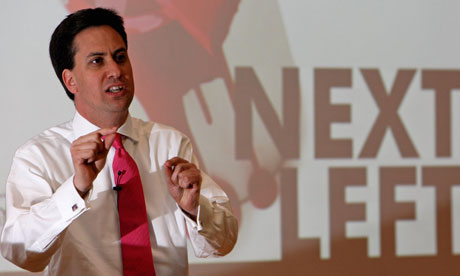
“Same old taxes, same old Tories”. Ed Miliband’s response to the chancellor’s “budget for growth” last week was characterised by an aggressive, knowing ennui. It was as if Miliband had cast himself as an aging prima donna reclining on a (red) velvet chaise-longue, warning her child away from an only seemingly reformed no-good suitor. “I know what they’re like, you know what they’re like”, he seemed to be saying. Don’t be fooled by “friendly” George’s marriage proposal, also known as his budget for “growth”. He’s still the same man who stole your money to buy a dead puppy as a present for your sister.
The presumption Miliband and his speechwriters are making is that we do know what the Conservatives are like; that we will easily remember what they’re like if we cast our collective minds back to 1997 when they were last in government (or when they last proposed to us, depending on how long this analogy can be dragged out). This message was clearest during one of the speech’s defining moments, in which, against a supportive background of taunts and cheers from buoyed-up Labour ministers, Miliband described Osborne as embodying the “hubris and arrogance of the early 1990s, the same broken promises…he’s Norman Lamont with an iPod”.
Big words. In fact, pretty funny words, if you know who Norman Lamont is. Presumably the majority of MPs can remember, but during the time of the last Tory government I personally was more interested in learning to read and tie my shoes up unaided than in keeping abreast of party politics. That’s not to say that it takes longer than three seconds to google Norman Lamont, but, in terms of making what should be an easy appeal to an increasingly large base of dispossessed young voters whose political consciousness wasn’t fully formed during the 90s, he shouldn’t think that “same old Tories” hits hard without proper explication. He can’t assume that we all have politics degrees, particularly now that nobody can afford a degree.
Of course, for every potential young Labourite for whom “classic Tory con” means at least a week in the (soon-to-be-closed) library, there are many more who internalised Thatcher-hatred, if not Major-hatred, with their mother’s blissfully unsnatched milk.
Neither should Miliband focus only on the young to the exclusion of anybody born before 1970. But if the point is to win over those wavering in their support for the coalition, he should consider that reiterating that the Tories haven’t really changed speaks only to those who were won over by Cameron’s “progressive Conservatism” election campaign. Nobody who has read a newspaper in the last year can be fooling themselves that there is anything progressive about this government’s programme.
Miliband needs to find more imaginative ways to convey more clearly exactly what the broken promises and economic deceits of this government are. A great example of this in his anti-budget speech was the line he nicked from the institute of fiscal studies, that the budget gives with one hand, and “takes away with lots and lots of other hands”. This calls to mind an illustration of the government as an amorphous, ACME-white-gloved-hands machine which is figurative enough to give some substance to figures about fuel duty drops and VAT rises. The slogan “too far and too fast” is also relatively credible, however much it sounds like an adolescent sexual encounter, or the working title of the misogynist car-chase film The Fast and the Furious.
As well as pointing out what the problems with Tory-Lib Dem policy are, a better, clearer explication of Labour’s economic alternative to the “budget for growth” would be most welcome. Indeed, the huge support that resulted in at least a 250,000 person turn-out for the march for the alternative is not at all surprising. It is clear that if there are alternatives. We want to hear about them, and we want to hear about them in a detailed, extensive, well-publicised way, preferably published in the form of a weighty tome that can be used for the purposes of hitting Nick Clegg.
“Same old Tories” preaches only to the converted. In a time of opposition, this is not enough.
Labels:
labour uncut,
politics,
rhetoric
Sunday, 13 March 2011
Sisterhood is not dead. It is alive and kicking and living in Labour
Article first published on Labour Uncut: http://labour-uncut.co.uk/2011/03/13/sisterhood-is-not-dead
As a relatively new Labour party member, attending the annual women’s conference – celebrating the centenary of international women’s day – was a first insider’s foray into the challenges discussed by women in party politics. The day seemed to structure itself: talks could hardly do anything other than concentrate on the systematic attack on women that is Tory-Lib Dem policy, and women’s continued under-representation in government and politics. It doesn’t take much to connect these two themes. More surprising, though, was an explicit focus on sisterhood. Throughout the day the speakers repeatedly entreated the audience as “sisters” to support pro-women initiatives. Though there was little open reference to feminism and feminists, barely a scratch on the surface of the conference was needed to reveal the underlying message: sisterhood is still powerful.
This is big news because even recently it hasn’t seemed that way. Only two years ago, Harriet Harman proposed a policy at the time so revolutionary, so unthinkable, that a riotous queue (with John Prescott at the head) formed, its sole purpose to decry her suggestion as self-serving nonsense. What was the proposal? Only this: that never again should Labour leadership be a male-only province. Rather, the leadership should always be comprised of one man, one woman, whether this be a male leader and female deputy leader, or vice versa.
Of course, Harman is no stranger to vitriolic demonisation from all branches of the media. When, during her time as acting leader, she suggested that we, you know, stop skirting around the endemic problem of domestic violence and start educating children about relationships, booming derision and shouts of “man hater”! echoed from Parliament Square to Aberdeen. This, after all, is only Britain’s currently longest continuously serving female MP, who, arguably, has done the most of anyone in Parliament to push gender equality policy in Britain over the last twenty years. Why should anybody take her seriously?
On Saturday, it seemed that, at least within the women’s side of the party, the side of the party, after all, on which feminist policy most directly impacts, the support for a full and active sisterhood is there. This was reflected most obviously in multiple paeans to Harman’s work, with the other speakers (most of whom have much to be congratulated on themselves) each taking the time to express their support for Harman and her dedication to gender equality.
During her speech, Harman made clear that she has not changed her mind on male-only leaderships, and the audience nodded agreement. Another of her proposals was for a senior position for a women’s organiser. It wasn’t entirely obvious whether this would comprise an additional women’s (as opposed to the broader “equalities”) minister position, or an official recognition at a high level of a Labour women’s leader, or a bit of both. Either way, seven hundred Labour women (and the few men present) were overwhelmingly supportive.
In previous years, considerable numbers of feminists, both female and male, argued that continued demonstrations of female merit and changing cultural attitudes are all that is needed to create a steady increase of women in ministerial positions. The predicted increase has not occurred. It is worth bearing in mind that it is positive discrimination that has enabled 31% female Labour MPs, more than all of the other parties put together. Whatever past reservations may have been expressed about all-women shortlists and other kinds of quotas, there was a feeling in Saturday’s audience that the bluntest tool is better than no tool at all.
It seemed that Ed Miliband’s Labour wants to be seen to be really doing something to tackle the continuing under-representation of women in government politics, and that the call out to women as sisters was intended to stimulate a renewed focus on women’s power as a group, however differentiated by race, class, sexuality, or ability.
How is the political will to increase women’s representation in politics created? Last Saturday, the answer was clear and resounding. It will be the action of women themselves that finally succeeds in transforming the attitudes that still bar women from representative participation in government politics. The sisterhood is by no means dead, and more, unabashed, entreaty to the power of sisterhood is what it will take to create the kinds of political environments that at the conference had women lining up five to a mic to express their opinions. As Harman said in her opening address, “today’s unreasonableness is tomorrow’s justice and conventional wisdom”.
Labels:
cool,
labour uncut,
politics,
sisterhood,
women
Subscribe to:
Posts (Atom)