Showing posts with label rights. Show all posts

Tuesday, 2 October 2012

Five top tips for getting a job


You've finally graduated, with a good combined degree in Humanities and Other Useless Studies. You spent your university years relatively well. You played sport for a team, you joined an orchestra. You had a social life. You're reasonably well rounded, and entirely sure that you can a: answer the telephone, b: send an "email" and c: talk to people without accidentally saying "cunt". Ready to take on the adult world of employment.

But the glorious, hopeful summer has now turned to October, and you're sitting in your parents' kitchen in yesterday's pants with a mysterious crust on your face (this bears no relation to my own life, I'm totally fine. Having a great time, actually). You're on your fifth cup of instant coffee and its only ten in the morning. You're flicking through the same unpromising job ads that you've seen every day this week. Most of them tell you neither what the job is nor who it would be for, but they do use plenty of fun, meaningless phrases like "self starter".

The fortnightly trips to the job centre take on a nightmarish air. The night before sign-on day you wake up in your sleep, soaked in sweat. Will you be able to convince the sceptical woman behind the desk that you are worthy of this week's £56.25? Difficult to say, when passing the test to keep your benefits depends on you accepting individual blame for the failings of the political system.

Of course, there's always an opening in recruitment consulting, bribing other people into becoming recruitment consultants. If you don't think about it hard enough, maybe you won't notice that its an empty, self-perpetuating job cycle created to give desperate graduates something to do. Sometimes these consultants even call you up, deliberately ignoring whatever sector it is you marked as desirable on your CV:

Consultant: "Would you like a mind-numbingly boring job that you have absolutely no interest in?"

You: "No, thank you kindly"

Consultant: "You are clearly a benefits scrounging loser. I read about your kind in the Telegraph."


I've never had a conversation like that, but it's only a matter of time.


In any case, from one work-shy feckless job-seeker to another, here are my five top tips for getting a job. They have served me admirably well in the past:


1. Start your cover letter thus:

"Dear Company,

I have no idea who you are or what you do, but frankly the position advertised is an insult to someone of my abilities. Obviously I am capable of filing, answering the telephone, and making tea. During my degree I had to write essays about dialectical materialism, for fuck's sake. Please, please, please give me this job, I really need the money."


2. Apply for unpaid internships. When they offer them to you ask if they'll pay you. If not, turn them down in an outraged email railing against slave labour, linking them to the wikipedia page for the principle of "a fair day's wage for a fair day's work". Repeat.


3. Turn down any job offers you receive. If they're offering you a job, it can't be that great a job. What's wrong with them? (See: Groucho Marx)


4. Write intimidating speculative applications to companies who don't have job openings. Threaten to leave the country if they don't create a job for you. Why should multi-billion pound businesses receive favorable treatment?


5. Whenever friends, parents, partners or bloggers try to give you well-meant job advice, laugh long and loudly. You have no need of their advice! Have you not sent five thousand applications this very week! Do you not have as much chance as anyone else of landing the BBC Director-General job (as and when George Entwistle vacates it)? Shout all these things aggressively, then cry and run out of the room.


Good luck! You'll need it! 

Friday, 7 September 2012

Contraception is no stroll in the park and men should share the stress


On a side note, all the stock pictures of women and implants are of white women

I have a new piece up on Comment is free. Its about a recent scandal in which contraceptive implants have become lost in women's bodies, and problems with the contraceptive market more generally. And the global pharmaceutical industry. And gender: Contraception is no stroll in the park and men should share the stress

Tuesday, 13 December 2011

Familes are not factories

I'm guest blogging at The F Word this December! This is the first post, published last week: http://www.thefword.org.uk/blog/2011/12/post_6


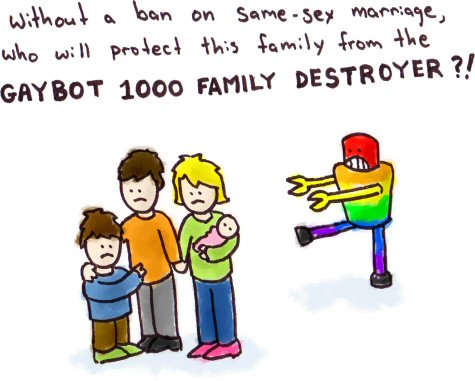
Good question. Tangentially relevant to this post.


My parents have been married for thirty years. I grew up in a semi-detached house in a suburb, one of three kids. The only surprise in the set-up is that we don’t have a picket fence. It was a Tory government’s wet dream of an upbringing. 
Somewhere along the line, though, something went wrong. The conveyer-belt churning out endless, identical replications of this ideal kinship model hit a snag, shuddered and stopped. It turned out one of the slightly-more-than-2.4 kids was queer and at least one of the others didn’t really give a damn about marriage. Our predicted stable, nuclear futures wobbled as reality, in all its glorious diversity, failed to conform to ideology.  
Thank god, then, for the government, who have announced the return, albeit in diluted form, of Thatcher’s Clause 28. Children in free schools or academies will in future be receiving heterosexist brainwashing instead of Sex and Relationships Education. Perhaps they can halt the cultural decline in straight people buying into holy matrimony by literally legislating for its ideological imposition? 
How obnoxiously weird that a practice designed to institutionalise the exchange of women-as-commodities should, in 2011, be being brought back as if it’s the only excellent kinship model. Over one third of marriages end in divorce, we know that only about 50% of people get married anyway - why do conservatives insist on touting the myth that marriage provides a stability that other forms of relationship don’t? Could they actually believe it, or is this a Dorries-esque way of grooming the next generation’s prejudices against the rights of those who threateningly queer the picture? 
Against all the evidence suggesting that other relationship models are also great, we are hugely invested in the ideal of marriage, in particular, in the importance of marriage to women. Popular, mildly-misogynist TV shows Don’t Tell the Bride and Four Weddings (both guilty pleasures, I admit) speak to this, camping up the ‘greatest-day-of-her-life’ aesthetic until it is too absurd to take seriously. Unless you’re Michael Gove, who presumably resolved to bring back Clause 28 during the Don’t Tell the Bride adverts. 
Given how much pro-marriage marketing we receive, perhaps it is not surprising that our common cultural conception is that it is vaguely ‘best for children’ if they grow up with married hetero-parents. The viciousness of anti-single-mother rhetoric, returning time again to narratives of blame and failure, only compounds this problem. The government spectacularly fails to consider the possible impact of such negative socialisation on children growing up in single-parent households. 
No matter. It is best for children to be brought up by married heterosexual couples , apparently, because two parents provide more stability than one. If an extra parent is so great, why wouldn’t it be better to have more than two? Why not four? Or ten? Why don’t we bring children up in communes, as envisaged by our feminist foremothers? 
I want to know why a marriage certificate makes a difference, if it is not just to get couples bogged down in financial commitments to each other so that they can’t separate. I’d like to know, moreover, how it could be better for children to grow up the company of two parents who would really rather have gone their separate ways, and why it is thought to be right that parents abnegate those - potentially eighteen - years of their lives ‘for the sake of the children’. I’d like to know why gender is presumed to make a difference to that equation, why God is genuinely believed to have given a shit about anybody’s chromosomes. 
Clause 28 is a case of cart-before-horse. There is nothing inherently better about nuclear families except the belief that they are better (coupled with tax breaks). If the children of hetero-marriages turn out to be better adjusted, whatever the hell that means, than those from other families, we need to look at the ways in which the former set of children are systematically culturally privileged and change the system accordingly. To conclude that therefore marriage is best and should be preached to kids is question-beggingly circular. It perpetuates the cycle, excluding those who can’t or won’t fit. 
I have seen at first hand that a heterosexual marriage can provide a stable upbringing in which children can grow. But I would contend that if there is anything about my orientation which would prevent me from bringing up kids in just as good a manner, it is the attitude of Gove and co, who, through Clause 28, will attempt to make sure that the society my children will grow up in will be even more full of hate than the society we have now. Thanks Gove, you utter wanker. 

Friday, 2 December 2011

Related Posts Plugin for WordPress, Blogger...