Showing posts with label identity. Show all posts

Monday, 18 February 2013

What it's like to be a news intern at The Jewish Chronicle

Judith Butler, combining topical Jewishness with general excellence

Hello! I've been interning at the Jewish Chronicle for the last fortnight, writing news and consuming my own body weight in cake. As anyone within earshot of me at any point knows, I have a dream that one day I will be paid to do journalism. Until that point, however, I'm learning valuable life lessons - like not assuming it's ok to use someone's surname (complaint number 1), not accidentally misquoting someone (complaint number 2) and not calling someone a lesbian unless they say you can (complaint number 3).

The JC, as it is affectionately known, is a highly pleasant place to work. On morning one they put me at a desk and told me to get on with it. It's exactly the kind of working environment I like. I've been able to engage in quintessentially journalistic pursuits like finding my own stories, doggedly tracking down people to talk to and calling up Russia for a chat.

Here are some of the stories I've written. Also, look out for forthcoming exciting reports on how a flaming meteorite hit Siberia and what to expect at this year's Jewish Book Week (hint: it includes Judith Butler).

First off, a guy called Rodrigo Rosenberg set up an elaborate plot to bring down the Guatemalan government:

'Perfectionist' lawyer arranged own murder


There was an exciting case of Holocaust 'fraud':

'Reich's youngest Nazi' investigated over Holocaust 'lies'


I continued my foray into LGBTQ oriented news, this time with a Jewish slant:

Gay marriage: shuls ready

Gay Jewish parents slam Catholic MP's anti-family allegations


There was a spate of (two) antisemitic attacks in France:

Antisemitic attack in Marseille

Knife-wielding woman threatens boy at Toulouse Jewish school


And most important of all, in light entertainment news:

Sacha Baron Cohen is best-paid British actor in the United States

Jewish burial hope has film star Drew Barrymore seeking tattoo removal

Galliano shocks in Chasidic garb

Monday, 31 December 2012

I'm giving up New Year's resolutions for 2013

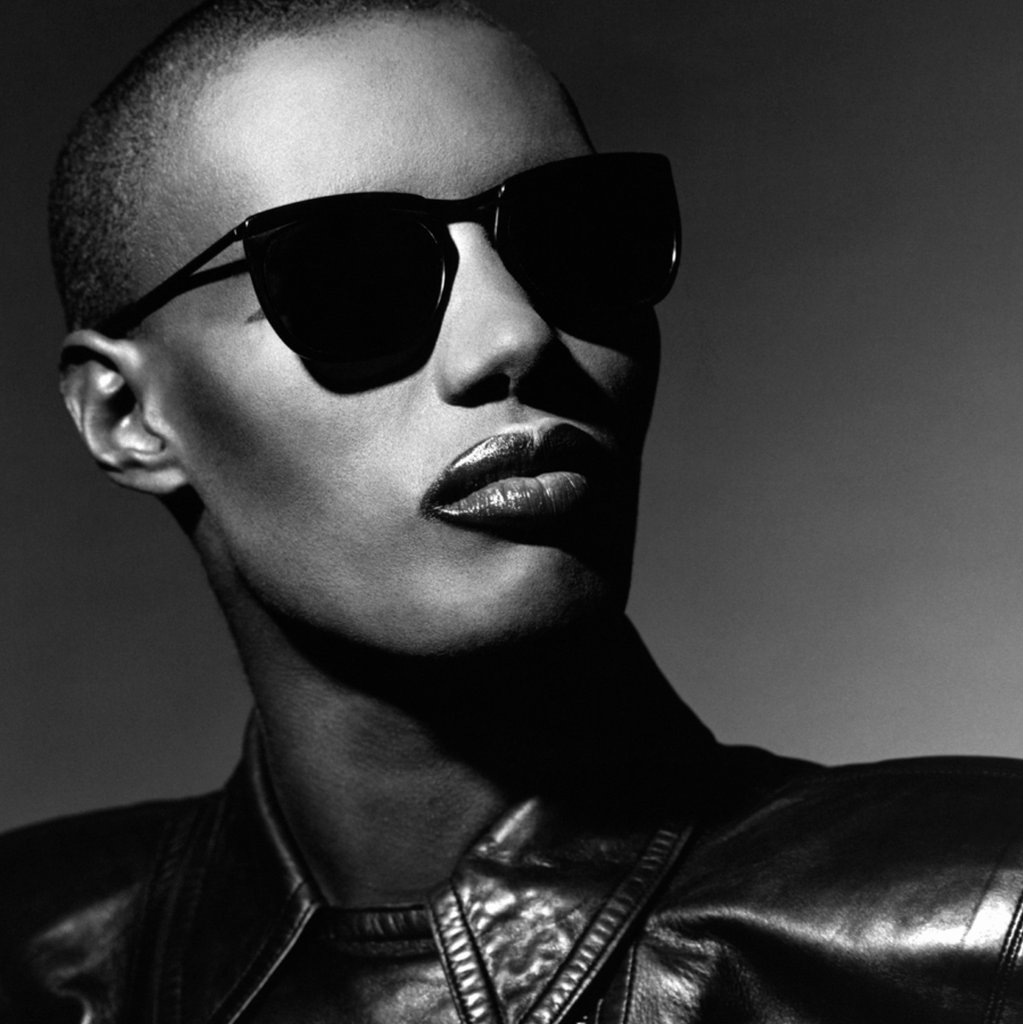
Grace Jones doesn't care about how you want to be a better person.

No-one has ever stuck to a New Year's resolution. Nobody. Let's face it, even the supposed resolution-keepers profiled here (warning: The Sun) have probably been given fat cheques for their lies. They're doing it to make you feel bad. The idea is that you will make resolutions and tell other people about your resolutions, making them feel as if they should also make resolutions. The only people that profit from this are gym owners and life coaches.

Think about this. A year's membership at Fitness First costs about £400. For that you could have:
-52 packets of 20 Marlboro Gold (King Size)
-268 packets of Mr. Kipling Bramley Apple Pies (or 1608 individual pies)
-A return flight to Barcelona, leaving London on New Year's Day (with enough money left over for a hotel and some tapas)

In any case, we all know that New Year's resolutions are really about shared guilt. It's capitalism's way of getting the population back under control. Ok, Ms. Smith, you've had your Christmas turkey. Now back in the office. It's time for another eleven months and twenty three days of data input. Don't complain, the holidays are over.

Responding to neo-liberal aspiration culture, the resolutions we make are grotesquely self-centred. For everybody who resolves to spend their time volunteering somewhere worthy, another hundred* simply want to look better. We're caught in an endless annual cycle of dead-end working, relief binging and resolving not to do it again. Next year I will be better. Next year I will stop being me. Next year I will be somebody else.

"I should really lose this paunch", we think. I should quit biting my nails, drinking and sitting around making it look as if my belly button can speak.We fantasize about becoming the person of our dreams: a quadrilingual, zitar-playing, pilates appreciating, flat-abbed work fanatic. Imagine how boring 2013 would be if everybody became this person. Sales of zitars would rocket in inverse proportion to the amount of fun people would have.

Every New Year for six years, I resolved to quit smoking. This resulted in two months of smokeless smugness, followed by the occasional guilty fag, followed by a return to full smoking by April. For several years I resolved to quit by never buying fags. Not buying was an easier resolution to keep, but it didn't stop me smoking. Instead, I alienated friends and lovers by constantly sponging off them.

New Year's resolutions are made to be broken. Secretly, we know this. We also know that you can let yourself off the guilty hook by February (at the latest) if you haven't stuck to your resolutions.

Anyway, the only thing more tiresome than bettering oneself is telling other people about it. As Grace Jones once famously said, "Save your breath".

For 2013, my New Year's resolution is not to have a resolution. I had been thinking of valuing my friends and family, ending procrastination and finally writing an insane polemical novel. But fuck self-improvement for 2013. Instead, I'm going to revel in being resolution-free. Gloriously, wantonly and lazily. Only another 1603 apple pies to get through.


*This is scientifically proven

Tuesday, 23 October 2012

"Intersectionality", let me Google that for you

So great? 

It's all kicked off on twitter over the last two days since The V Spot's problematic blog "In defence of Caitlin Moran and populist feminism".

In response, I've written a piece over at New Statesman.

It's called "'Intersectionality', let me Google that for you." It's on the issue of who feminism is for: http://www.newstatesman.com/lifestyle/2012/10/intersectionality-let-me-google-you


Here are some great pieces by others on the same debate:

Dear Vagenda editors: http://blackfeminists.org/2012/10/23/dear-vagenda-editors/

You don't need an MA in Gender Studies to know that race matters to feminism: http://www.guardian.co.uk/commentisfree/2012/oct/23/race-matters-to-feminism

How to be better: on intersectionality, privilege and silencing: http://stavvers.wordpress.com/2012/10/22/how-to-be-better-on-intersectionality-privilege-and-silencing/


Thursday, 12 January 2012

A well regulated press would also be a freer press, if it could do anything to end media sexism

Not another picture of Pippa Middleton's ass

The Leveson inquiry drags on, akin to the 1000 pages in the middle of The Lord of The Rings where the hobbits do nothing but walk across a cliff. We're still only on the first half - the bit of the inquiry in which press culture, ethics and practices are vigorously talked about. In fellowship terms, we're barely out of the shire.


Lord Justice Leveson is now indicating that he is unlikely to consider any government regulation. That may not be so disappointing, given the government's seeming view on regulation, otherwise expressed as 'we hate regulation'. But this does leave us to speculate on exactly what actions Leveson may be intending. In a manner quite dissimilar to that of Tolkien's oeuvre, the inquiry does not seem to be leading to any massive inexorable conclusions. 

At the end of last year coalition of mainstream feminist groups (the End Violence Against Women coalition (EVAW), Eaves, OBJECT and Equality Now) submitted to the Leveson inquiry that it should address press sexism as part of a full investigation into the relationship between media and society.* How unbelievably heinous; it takes a country-wide media culture overhaul to enable official challenge to media myths of the alien species, 'women', who do nothing but lie about rape, wear clothes, or not wear clothes.


In this video, a Sky News commentator speculates - ever so insightfully - that the inquiry's outcome may be a 'tougher, beefed up, testosterone fuelled regulator.' Sexist language aside (and the identification 'good=masculine' could be one of the first things to go, if you ask me) a proper independent press complaints commission would seem to be one highly logical outcome of the inquiry. We already have one, after all, giving it teeth would be relatively easy. 

The problem is that enabling it to take action against sexism would take greater ovaries than Leveson could ever countenance. The culture is too longstanding, and it runs too deep in the national psyche. The suggestion of any anti-sexist regulation stronger than 'um, guys, can you please play nicely?' is invariably met with the outraged cry: 'FEMINIST CENSORSHIP!!!!' or 'A FREE PRESS IS THE SOLE HALLMARK OF A DEMOCRATIC SOCIETY!!!' or, as with Clare Short's campaign to end Page 3, you are clearly just 'fat and ugly' and 'jealous of beautiful young women'. 


Here is what will (probably) happen instead. Between now and the announcement of a new PCC, the bit of the inquiry that was about countering media misogyny will get lost. Or looked over. Or watered down so much that it will become irrelevant. Some concession may be made to not displaying 'inappropriate' materials pre-watershed, 'where children can see'. But the banal onslaught of everything that is idiotic in our culture, the four hundred pictures of Pippa Middleton's bum, the appraisal of women politicians on the basis of their clothing choice - all this will continue.

Those who get on the high horse about the inalienable right to free expression forget that in practice this has meant the unabated reproduction of unsubstantiated ideologies about less powerful groups who, non-coincidentally, have less press control. The people who read rape reports focusing mainly on 'false' accusations, skirts, and alcohol consumption, are the same people who comprise juries who sit in on rape cases from which rapists repeatedly walk free. That's the very definition of a vicious circle.

To mandate that women should be represented as people who partake in the public sphere in roles which are not primarily aesthetic is simply to mandate representations closer to the truth. An end to the barrage of boobs and bimbos would make life a lot freer for the women who would like to be assessed on the basis of their actions rather than for the shape of their behinds. I hope Lord Leveson is brave enough to say so.


*Disclaimer: I don't agree with everything that was put forward by all of these organisations, but implementation of anything vaguely anti-misogynist would be better than what we have now. 

Thursday, 3 November 2011

Here is my opinion, deal with it: on real life silencing and internet abuse


Edited version of this post published at Liberal Conspiracy: http://liberalconspiracy.org/2011/11/04/how-womens-voices-are-silenced-online-through-trolling/


It's funny because it's, like, true


It's difficult for women to speak in public, particularly political women. Today Helen Hasteley-Lewis blogged at the New Statesman about the torrential online abuse feminist writers get. This follows Cath Elliott's blog earlier this year on the shocking invective she personally regularly receives. At the moment, the internet is a society where being (perceived as) female and writing about feminism invariably leads to responses on the theme of: 'shut up or I will rape you/you're ugly and deserve to be raped/you're too ugly to be raped'. 

This is a form of silencing, an internalised gendered behavior which acts reflexively to suppress challenging opinions - particularly those vocalised by women. Abuse is more explicitly misogynist online, where trolls can hide behind anonymised usernames, but it isn't a phenomenon isolated to the internet. The watered-down version plays out offline all the time.

Show me a mixed gender group of any sort and I will show you a group where men speak more than women, where women are regularly interrupted, where something ignored when said by a woman will be praised when said by a man.* Debates about the merits of women-only spaces sometimes ignore the value, for women, of being in a group where they are not constantly struggling to be heard.

This is not to say that there aren't loud, opinionated, dominating women, or shy, retiring men, or that people biologically conform to a gender binary. It not to say that ALL WOMEN are one way and ALL MEN are another way. It's not to say that silencing doesn't happen along other axes of oppression, race and class being two of the rather pertinent ones. It is, however, to say that a meaningful gender analysis can be enacted on the ways that women's voices are publicly stifled. It is to say that the loud, opinionated, dominating women who want to write have to get past discriminations that loud, opinionated, dominating men don't. Online abuse is just the most blatant example of this.


How does silencing work? Partially, it works by ad feminam response. Suppose that Fictional-but-also-factual-John and I are having a discussion. I say that I think silencing is something that is usually directed against women by men in order to shut them up. John replies with, 'okay, but you don't have to be so angry about it all the time/you're cute when you're political!/did someone get out of bed on the wrong side this morning?/you don't have to make it about gender all the time/you're just saying that because you're a woman/ok...come here and kiss me/yeah but you're fat and ugly and therefore irrelevant', and so on. My opinion is sidestepped; irony abounds. Next time, it is harder to speak.


Silencing works by trivialisation of what women say, through mockery of what women say, through reducing-women-to-sexual-appearance. Subconsciously, we have internalised the idea that whatever it is, it is better if it comes from the mouth of a man than from a woman. It happens all the time. Ever seen a group of men sitting around making jokes as their female friends laugh appreciatively? I have, and I've also seen what often (but not always) happens when women try to join in. Anecdotal it may be, but at some point collections of women's experiences become overwhelming evidence. Women are being told online that they're sexually unattractive femi-nazis who deserve to be attacked, and being ignored/mocked/trivialised offline. After being silenced once, twice, a thousand times, I find it surprising that anybody has the labia to say anything at all. 

If you, of any gender, find yourself instinctively disregarding what a woman is saying, if you find yourself not listening, or wanting to interrupt, or looking at the clock, you are enacting a form of silencing. If find yourself thinking, 'what a cow/bitch/hag' when a woman is saying something in an outspoken fashion, you are taking part in the mentality of silencing. Take a step back, have a look at your own privilege, and then, please, stop doing it.


*For more on this, see Cordelia Fine's Delusions of Gender. 

Wednesday, 19 October 2011

The problem with sexy children


This look: correct in women, totally perverse in children


Sexualisation: a buzzword for feminists, Christians and conservative party leaders. Most people agree it's a Bad Thing, particularly when it happens to our delicate little children, who must be protected. If sexualisation is impacting upon children, says everybody, then, and only then, must we take rigorous measures to oppose it. In particular, we must complain about Rihanna dancing on X-Factor in her too-risque undies, and make sure that schoolgirls wear trousers so that they don't invite sexual assault. In case you were face-palming there, let's just say that the latter policy clearly springs from the same mind that wrote the hilarious joke: 'what's the leading cause of peodophilia?'... 'sexy children'.

A desultory review of the internet literature on sexualisation reveals that it's affecting children everywhere. It pervades our culture through magazines, 'pornstar' slogans on children's clothing, under-wired bras for little girls, music videos (though the fixation is on female pop stars, not the male hip hop artists who use naked-gyrating-women as legal tender), television generally, and so on. These impressionable young minds see it, take it in, and start acting like sexy adults far too young. The solution, therefore, apparently, is to stop our children seeing sex-related things. 


Of course it would be totally fine if she was a bit older..
The most recent governmentally commissioned research on this, the Bailey Review of the Commercialisation and Sexualisation of Childhood, deliberately fails to define sexualisation. That's because it was written by a man whose agenda is not anti-sexualisation, but anti-sex. For Bailey, 'sexualisation' is just convenient modern jargon to slip a right-wing agenda under the policy radar.

Let's stop pretending that children and young adolescents don't have sexualities. Don't you remember your furtive childhood wanks? It's simply ridiculous to believe that sexuality rightfully gets switched on when we reach the age of consent, as if the benchmark 'sixteen' represents anything other than an arbitrary regulatory decision of the state.

The problem is not sex but its cultural implementation, and an aspect of that is the difference between sex and sexualisation. Part of me doesn't want my figurative children to find out just how limiting, sexist, racist, homophobic, etc, adult women's cultural sexual representation is, but I'm not going to sit around acting as if stopping them from seeing the images does anything to stop the images-as-messages from being there.

Girls are not sexualised because they develop and experience their own sexualities, nor are children-who-must-be-protected generally sexualised because they have sex. Girls are sexualised, rather, because women's and girl's sexualities are still culturally defined in a way that detaches genuine sexual pleasure from the body, replacing it with a narrow, limiting appearance of (submissive) arousal. Ariel Levy was saying something similar to this six years ago, by the way. Why is it considered sexy for women but not men to wear make-up, heels and lingerie? (I personally think men in make-up, heels and lingerie are incredibly sexy, but I seem to be the perverse minority)

The Bailey Review correctly identifies sexualised products, but doesn't really pick up on the other problems that comprise sexualisation: the normalisation of a particular kind of sexy-woman standard that all women are held up as wanting against. Sexualisation is a horrifically gendered thing whereby men sexually consume agency devoid women-commodities. The extensive possibilities for and variations in peoples' sexualities are denied except where they match the man-fucks-sexy-woman standard. I recognise that some women get off perfectly well under the popular narrative, which is great for them, but even as much as sexuality reflects society, many still cannot fit the box.

There is a fundamental problem with the idea that sexualisation is terrible up until the age of sixteen, at which point it's all fine and normal (The Bailey Review uses the term 'premature sexualisation'!) It's sad that girls will have to resist everything the sexualised society tells them about themselves, their desires and their bodies, in order to have fulfilling sex lives. Yet I would almost prefer that they learn about it early so that they can start developing the critical tools to call it out for what it is - a fabricated belief system of the misogynist imagination. Perhaps children should know their enemy. 

Monday, 25 July 2011

Saturday, 25 June 2011

Let's not get derailed in discussing violence against women

Originally published at Liberal Conspiracy: http://liberalconspiracy.org/2011/06/24/lets-not-get-derailed-in-discussing-violence-against-women


It’s the same every time. A feminist politician or campaign group proposes a patently sensible idea, and the derailing begins.

The End Violence Against Women (EVAW) report is a comprehensive study on the massive prevalence of violence against women and girls, calling on Michael Gove to make a priority of educating against sexism in schools.

Great stuff. Simple common sense, even; unless you are generally in favour of violence against women. But developments like these are a starting horn for discussion derailers.

Here’s one we’ve heard before, ‘but men are victims of violence too!’ Another derailer chips in, ‘and what about female perpetrators of violence?’ We might even hear a bit of, ‘Why focus on women? Shouldn’t we just be educating children about violence generally?’

I recently saw a column by the Somalian women’s minister derailed in this way. It was outrageous, apparently, that a women’s minister should dare to write about the abominable problems specific to women in her country.

When the derailers get going, the debate takes a sudden turn to the right. Instead of discussing the part of the proposal which calls on Gove to develop schools in which girls are not subject to abuse, rape, sexual harassment, bullying or shaming, we are arguing about whether it is right to take gender-specific actions at all.

For the last time, YES, people of all genders perpetrate violence. YES, people of all genders are victims of violence. YES, there is domestic violence between same-sex partners. Now can we go back to EVAW’s proposals?

The derailers are univocally, universally missing the point. Education about violence against women cannot be simply subsumed under education about violence against people generally, and to suggest it should be deliberately ignores the scale of the problem of violence against women.

Consistent evidence demonstrates that it is disproportionately men who enact violence, and disproportionately women who are subject to it. If you want to contest this, go away and do some research.

So don’t get it twisted. The fact that other kinds of violence happen doesn’t negate the need for feminist education to combat the virulent combination of institutional misogyny, equation of masculinity with violence, and culture of sex negativity which makes sex a commodity that boys ‘get’ from girls, not something that all parties enter into consensually.

Violence against women is normalised and perpetuated when sexism goes unchallenged, but if young people are taught better across the board I’d be willing to stake my right arm, left leg and favourite hat that we will see cultural change.

No one denies that men and boys are also victims of violence. But do you know how it feels to be a woman, or a girl, where the sexual harassment, abuse and shaming starts at school and carries on into adulthood? If you don’t, talk to your girlfriend, female friends, mother, sister. They’ll put you on track.


More to look at:

http://www.endviolenceagainstwomen.org.uk/

Wednesday, 22 June 2011

Staring at dykes on trains

Article originally submitted to Gender Agenda Zine, edited by Elly Robson and Clementine Beauvais, whose wonderful cartoons you can find here: Doodles from the Bubble


Like this (left), but with less touching and more staring

Saturday afternoon. I’m wearing a yellow vest top and long adidas shorts, listening to Sleater-Kinney at their angry best, reflecting portentously upon an event of singular importance: my next haircut. Should I go for the quiff and shaved side bits again, or is it time to change to the andro-summer crop? Every recent hairdressing experience of mine features this exchange - ‘I won’t cut it that short, you don’t want to look like a boy’... ‘No, I do! Make me a boy! I like masculine! Actually, maybe that’s too short. Oh God, what have I done?! Maybe it will be ok with lipstick.’

Its a truism that every lesbian looks like a lesbian in some sense. But if every lesbian really looked that different we wouldn’t be recognisable at all, and we are. Much of my commuting time over the years I’ve been living in London has been dedicated to figuring out what gives the game away, what distinguishes a straight-looking woman from an obviously, irreversibly flaming dyke.

From humble beginnings trying unsuccessfully to catch the eye of an attractive, shaven headed, twenty stone, dungaree-wearing bull-dagger holding a copy of the (sadly defunct) Pink Paper - she stared me down mockingly as she left the train - I have come to know something of what the signs are.

There are the socially visible markers of a woman with a butch identity. Docs, crop, shirts, jeans, ties, the ‘I can take you, your best friend, and your mother. As long as you all consent.’ attitude. There are the East Londoner signs: slightly more androgynous than your average hipster, likely to be found wearing an aggressive jacket. There are the femme indicators, sometimes nothing more than a look in the eye, a slightly geometrical haircut, short nails, and the all-over back-at-you appraisal which is definitely (in my imagination) more I’d-like-to-fuck-you than I-like-what-you’re-wearing-oriented.

There are lesbian-feminists from the hallowed field of Greenham Common. I often see them holding ‘zines, wearing badges and studiously defying fashion fascism all at once. There are queers who defy fashion fascism by denying that fashion could exist as a meaningful class. There are the bisexual women who might fall into any of these camps.

And of course there are the lesbians that don’t look back at me, who I don’t recognise and can’t put into a lesbian-concepts box based on outmoded ideas about what we look like. There are the straight women who I prejudicially stereotype as lesbians because they’re wearing plaid shirts. There are women of all orientations who probably want to know why I’m looking at them when they’re trying to get to work.

The train is one thing. The scene is another. In a lesbian club, or, more likely, a ‘mixed’ night (i.e. 94% cock, 5% cunt, 1% other) you’d be forgiven for the default assumption that whatever the woman in front of you looks like, she’s on the team. But given the straight female penchant for turning up with gay men at gay nights, it is not just interesting but also quite useful to keep an eye out for lesbians.

Please bear in mind, when I say that, that I once spent a significant proportion of a night chatting up the only straight girl at Brighton Pride. (She didn’t tell me until I tried to kiss her. She was at PRIDE, LESBIAN PRIDE, and I could not have made it more obvious that I was flirting.)

Anyway, in amongst this resuscitation of ideas so hackneyed they lived in squats in Dalston before it was hip, there is a point, I promise. Here it comes.

Why have I spent years, mostly on the tube, trying to distinguish dykes from heteros based mostly on cliche-driven assumptions? It’s not just because trains are long and boring, its because, in this big bad heterosexist world, seeing another queer woman is a little bit of reassurance. When I catch a lesbian’s eye and she catches mine back before I look away in terror, it’s a small affirmation of a shared identity. That’s what it is to me, anyway. And by the way, speaking as someone who has been scared of ‘looking like a lesbian’ for my whole life, I don’t think we should be scared of admitting that there is something true enough to stereotype that the many cultural signifiers of queer-woman-hood are visible to those who look.

By the way, for those of you that find this article pointless, superficial, objectifying, banal and generally offensive, feel free to leave a comment.
Related Posts Plugin for WordPress, Blogger...