Showing posts with label rhetoric. Show all posts

Thursday, 4 October 2012

Feminist slam poetry for National Poetry Day

To celebrate National Poetry Day, here are some of my favourite feminist slam poems. They are clever, moving, amazing, and about as far from the GCSE poetry anthology as you can get, thankfully. Some are long but they are totally worth the investment. Enjoy bubbelehs, enjoy.

*trigger warning*


Staceyann Chin - My first period. Also features a haiku about George Bush.

"Even Jesus had to pass through a punani
Angels and messengers aside
Mary had to lend passage to god
Or them Christians might still be Jews 
Waiting for a christ that was stuck up the ass of some man
Who thought he could do what little girls do
Every day against our wishes" 


Andrea Gibson - Letter to a playground bully from Andrea (age 8)


"I am not 'always crying', 
I am just thawing outside the lines."


Sonya Renee - What women deserve

"Women do deserve better, 
Women deserve choice"

I think I have linked to this on the blog before, but it is just so great.


Alix Olson - Subtle sister 

"So I take back the whispers, the cute, mute act and the high pitched giggles, 
Yeah I take them back 
I won't avoid your stare evade your step 
Nothing of that kind, 
I won't help you help me victimise the only space that's mine." 


(Unfortunately this video is cut with other footage - but its the only reasonable version I can find on Youtube).


And finally:

Mindi Nettifee - For young women who don't consider themselves feminists (the last nerve)


Who have I missed out? Please share your favourite feminist poems below!


More:

http://msmagazine.com/blog/blog/2012/03/27/future-of-feminism-telling-our-stories-out-loud/


Tuesday, 29 May 2012

Tuesday, 27 March 2012

Feminism is not just about choice


Um, this is awesome, and a T-shirt.


All of a sudden we're talking about 'a woman's right to choose' again. Threatening tactics more associated with the American anti-choice movement are steadily creeping across the pond, whilst in the States, the debate has spiralled even further downwards. On April 1st the '40 Days for Life' anti-choice campaign ends - 40 days during which abortion clinics worldwide were picketed, with abortion providers and women seeking abortions harassed, filmed, and intimidated. Recent exposes by the British Humanist Association and Feminist Action Cambridge show that anti-choice group the "Society for the Protection of Unborn Children" (SPUC) tell an incredible pack of lies during talks in schools - including the facepalm-inducing claim that abortion causes breast cancer. It's an increasingly terrifying time to be a fertile woman. 
'Choice' is invaluable when framing the fight for continued reproductive rights. However much Nadine Dorries' anti-choice minions might disingenously proclaim themselves to be 'pro-woman', the fact remains that the only real pro-woman approach is one that admits of a woman's right to choose what to do with her body. The US anti-choice slogan 'women deserve better' can be seen for what it is - a blinding bit of double-think - if you can see that the implicit end of the sentence is '...than to have the right to decide whether or not to carry a preganancy to term' (of course that full slogan would be neither catchy nor persuasive). As Sonya Renee concludes in this amazing video, "women do deserve better, women deserve choice". 
But feminism has more to say than, 'Great, you've chosen! Awesome! We can go home now!'  Feminism as a whole is about more than enabling women to choose, even if the right to choose is a good start. The idea that feminism's end aim is just to enable women to make the choices that are right for them is almost meaningless if it isn't combined with opposition to systematic oppressions. Paid work or unpaid household labour, leaving or staying with an abusive partner, choosing underwear, opting for either Team Edward or Jacob; all of these choices are relevant for feminists (and are situated against areas of feminist thought and criticism), but not all of the options are equal. 
Recently I've been hearing more and more about 'agency' - another important area for feminists which can sometimes become little more than a misused buzzword. Women's agency and women's choices aren't the same thing, but distinctions are rarely made. Choices reflect agency - but agency can be and is always constrained by more than just the choices that are available. 
We need to admit both that women's agency differentiates depending on position and privilege, and that women's agency is disproportionately constrained compared to men's. The existence of some women who are more privileged than some men in no way undermines patriarchy, anymore than the existence of the wonderful Borgen undermines the awfulness that is TV (not strictly a logical analogy). 
There are problems when 'agency' or 'choice' is used to block strands of feminist criticism. This debate is most often representational: the constant compulsions to be feminine, or beautiful, to wear make-up and heels, to 'perform' sexuality rather than experience it, are justified as agency-based choices which are therefore untouchable. We've got so caught up in saying 'of course you can be a feminist and wear make up and be pretty!' that we've stopped analysing the gendered institutions that create these pressures on women. Recognising that these things are gendered pressures doesn't mean you have to immediately throw your lipstick away to be a feminist, but its equally dishonest to refuse to analyze something that you happen to like. 
There are some fair criticisms of feminist positions that a: suggest that women who make 'anti-feminist choices' are either devoid of agency or anti-feminist themselves, or b: speak from some sort of unquestionable position of privileged 'total agency'.  It's very easy for me to point the angry-n-militant finger at the decision for breast enlargement, for example, as someone who basically lives in a library surrounded by weighty tomes and other people who mostly haven't had breast enlargement surgery. My life wouldn't improve if I modified my body in line with dominant cultural expectations. That's a massive privilege. I'm sure that cosmetic surgery might be a reasonable choice within a set of available options; this doesn't necessarily represent lack of agency, or greater false consciousness, or any of those other feminist bugbears. 
When porn director Anna Arrowsmith describes pornography as a 'dream job' that 'we consent' to, though,  she's really missing the point. The key to it is not to load choices with values: my choice is feminist and yours is not ("erotica is what I like, pornography is what you like"). Nor is it about decrying women who make certain choices as anti-feminist - I reckon feminists are defined by self-definition, within reason. It is past time, way past time, though, that we stopped being persuaded by attempts to paint oppressive institutions as 'feminist' through the rhetoric of 'choice' or 'you are denying my agency'. 
Just because some women choose to do it, it doesn't make it ok. It doesn't make it ok for feminists to attack other (less privileged) feminists, but critique shouldn't be stifled. The undeniable agency of the woman involved is not the last feminist word on the subject. Choice is important, but it means little without criticism, and even less without change. 

Thursday, 3 November 2011

Here is my opinion, deal with it: on real life silencing and internet abuse


Edited version of this post published at Liberal Conspiracy: http://liberalconspiracy.org/2011/11/04/how-womens-voices-are-silenced-online-through-trolling/


It's funny because it's, like, true


It's difficult for women to speak in public, particularly political women. Today Helen Hasteley-Lewis blogged at the New Statesman about the torrential online abuse feminist writers get. This follows Cath Elliott's blog earlier this year on the shocking invective she personally regularly receives. At the moment, the internet is a society where being (perceived as) female and writing about feminism invariably leads to responses on the theme of: 'shut up or I will rape you/you're ugly and deserve to be raped/you're too ugly to be raped'. 

This is a form of silencing, an internalised gendered behavior which acts reflexively to suppress challenging opinions - particularly those vocalised by women. Abuse is more explicitly misogynist online, where trolls can hide behind anonymised usernames, but it isn't a phenomenon isolated to the internet. The watered-down version plays out offline all the time.

Show me a mixed gender group of any sort and I will show you a group where men speak more than women, where women are regularly interrupted, where something ignored when said by a woman will be praised when said by a man.* Debates about the merits of women-only spaces sometimes ignore the value, for women, of being in a group where they are not constantly struggling to be heard.

This is not to say that there aren't loud, opinionated, dominating women, or shy, retiring men, or that people biologically conform to a gender binary. It not to say that ALL WOMEN are one way and ALL MEN are another way. It's not to say that silencing doesn't happen along other axes of oppression, race and class being two of the rather pertinent ones. It is, however, to say that a meaningful gender analysis can be enacted on the ways that women's voices are publicly stifled. It is to say that the loud, opinionated, dominating women who want to write have to get past discriminations that loud, opinionated, dominating men don't. Online abuse is just the most blatant example of this.


How does silencing work? Partially, it works by ad feminam response. Suppose that Fictional-but-also-factual-John and I are having a discussion. I say that I think silencing is something that is usually directed against women by men in order to shut them up. John replies with, 'okay, but you don't have to be so angry about it all the time/you're cute when you're political!/did someone get out of bed on the wrong side this morning?/you don't have to make it about gender all the time/you're just saying that because you're a woman/ok...come here and kiss me/yeah but you're fat and ugly and therefore irrelevant', and so on. My opinion is sidestepped; irony abounds. Next time, it is harder to speak.


Silencing works by trivialisation of what women say, through mockery of what women say, through reducing-women-to-sexual-appearance. Subconsciously, we have internalised the idea that whatever it is, it is better if it comes from the mouth of a man than from a woman. It happens all the time. Ever seen a group of men sitting around making jokes as their female friends laugh appreciatively? I have, and I've also seen what often (but not always) happens when women try to join in. Anecdotal it may be, but at some point collections of women's experiences become overwhelming evidence. Women are being told online that they're sexually unattractive femi-nazis who deserve to be attacked, and being ignored/mocked/trivialised offline. After being silenced once, twice, a thousand times, I find it surprising that anybody has the labia to say anything at all. 

If you, of any gender, find yourself instinctively disregarding what a woman is saying, if you find yourself not listening, or wanting to interrupt, or looking at the clock, you are enacting a form of silencing. If find yourself thinking, 'what a cow/bitch/hag' when a woman is saying something in an outspoken fashion, you are taking part in the mentality of silencing. Take a step back, have a look at your own privilege, and then, please, stop doing it.


*For more on this, see Cordelia Fine's Delusions of Gender. 

Tuesday, 26 July 2011

Norwegian mass murderer Anders Breivik's anti-feminist manifesto

I've just been having a browse through Anders Breivik's seminal work of hateful schlock, 2083: A Declaration of European Independence. Taking into account the murder of so many people, it makes for even more depressing reading than the usual internet bile. Unsurprisingly, alongside multiple expressions of racism, fascism, Islamophobia, white supremacism, etc. etc., we have good old anti-feminism. Misogyny. Anti-womanism.

A good job has already been done over at 'Manboobz' (I don't like the name but in this case I think the posts are worth linking to), extracting some of the particularly nasty anti-women sentiments. The resident blogger also points out, most pertinently, that these sentiments aren't at all out of place in the cluster of 'Men's Rights' websites and forums that fester all over the internet.

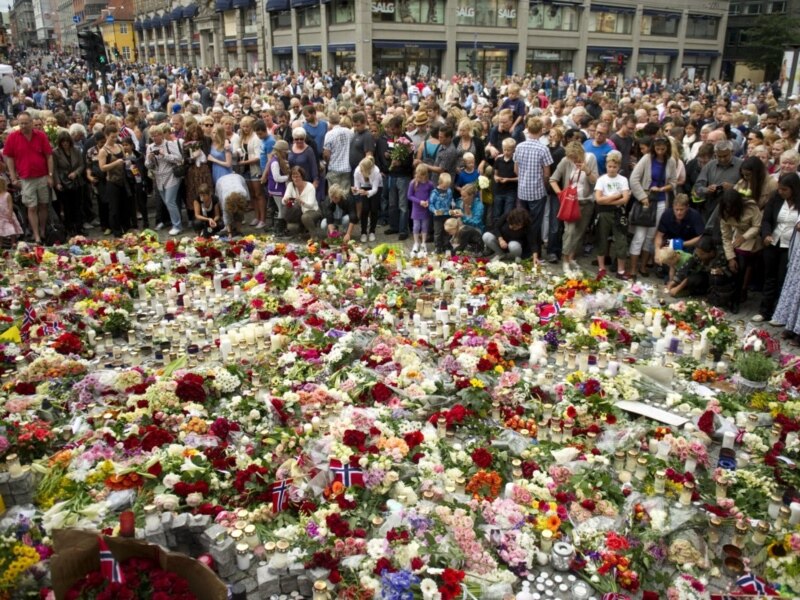
Tributes in Norway


Here, for your delectation, are a couple of beauties from the manifesto:

"Ladies should be wives and homemakers, not cops or soldiers, and men should still hold doors open for ladies. Children should not be born out of wedlock. Glorification of homosexuality should be shunned. Jurors should not accept Islam as an excuse for murder."

"Where do we see radical feminism ascendant? It is on television, where nearly every major offering has a female “power figure” and the plots and characters emphasise inferiority of the male and superiority of the female. It is in the military, where expanding opportunity for women, even in combat positions, has been accompanied by double standards and then lowered standards, as well as by a decline in enlistment of young men, while “warriors” in the services are leaving in droves. It is in government-mandated employment preferences and practices that benefit women and use “sexual harassment” charges to keep men in line. It is in colleges where women’s gender studies proliferate and “affirmative action” is applied in admissions and employment..." etc etc.

Like - I wish radical feminism was so powerful as Breivik believes? Actually, I can't be bothered to look for any more extracts. It goes on in much the same vein for 1518 pages.

Ok so the point is that this isn't just the work of one 'madman'. Breivik obviously had plenty of support from numerous others with the same ideas as him. He believed in his worldview, and he isn't the only one who does. The amount of rabid anti-feminism on the internet is shocking, and that's just the internet. I rarely meet committed anti-feminists in person (or at least, they don't tend to admit it to me) - but I know that plenty of them exist.

It is maybe the lesser of two evils that misogynists are permitted to reinforce their prejudices and disseminate their anti-woman ideology through the internet. But much, much more needs to be done before there is a widespread cultural recognition that (if you think it is helpful to speak of 'extremists' at all) anti-feminism is an extremist ideology just like racism, Islamophobia and all the rest. Its no coincidence that Breivik held all these beliefs concurrently. They're all connected.

Apologies for broken record-itis, but kids should really be taught this stuff in schools. I think that that is one of the most important steps forward for women's equality that could be made at present. It's only too obvious that where there is no education otherwise, there will be a bedrock of committed misogynists that bolster the ideas of those, like Breivik, who will go on to commit violent terror. Of course there isn't a catch-all solution to these problems, and maybe there will always be retrograde extremists who slip through the net. But it would be nice to see open sexism reduced to the same sort of level as, let's say, holocaust denial. That won't happen until we recognise the extent of the problem.

Monday, 25 July 2011

Friday, 27 May 2011

Where rape is concerned, talk isn't good enough.

I have a guest blog on The F Word. Hopefully it is not triggering, but it does concern rape and recent discussions of rape. If you'd like to read it, click here: http://www.thefword.org.uk/blog/2011/05/rape_in_the_media

What ludicrous distinctions, its obviously the same person. Oh, I didn't need to say that. This brilliant image makes the point all by itself.

Monday, 28 March 2011

"Same old Tories" doesn't tell me much

This article was originally published on Labour Uncut: http://labour-uncut.co.uk/2011/03/28/same-old-tories-doesnt-tell-me-much/#more-8605

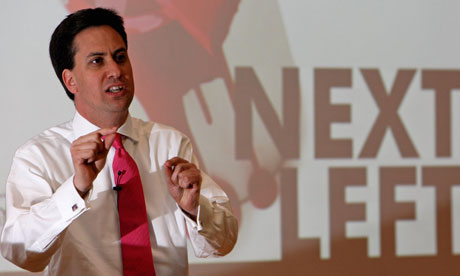
Really, Ed, really?


“Same old taxes, same old Tories”. Ed Miliband’s response to the chancellor’s “budget for growth” last week was characterised by an aggressive, knowing ennui. It was as if Miliband had cast himself as an aging prima donna reclining on a (red) velvet chaise-longue, warning her child away from an only seemingly reformed no-good suitor. “I know what they’re like, you know what they’re like”, he seemed to be saying. Don’t be fooled by “friendly” George’s marriage proposal, also known as his budget for “growth”. He’s still the same man who stole your money to buy a dead puppy as a present for your sister.

The presumption Miliband and his speechwriters are making is that we do know what the Conservatives are like; that we will easily remember what they’re like if we cast our collective minds back to 1997 when they were last in government (or when they last proposed to us, depending on how long this analogy can be dragged out). This message was clearest during one of the speech’s defining moments, in which, against a supportive background of taunts and cheers from buoyed-up Labour ministers, Miliband described Osborne as embodying the “hubris and arrogance of the early 1990s, the same broken promises…he’s Norman Lamont with an iPod”.

Big words. In fact, pretty funny words, if you know who Norman Lamont is. Presumably the majority of MPs can remember, but during the time of the last Tory government I personally was more interested in learning to read and tie my shoes up unaided than in keeping abreast of party politics. That’s not to say that it takes longer than three seconds to google Norman Lamont, but, in terms of making what should be an easy appeal to an increasingly large base of dispossessed young voters whose political consciousness wasn’t fully formed during the 90s, he shouldn’t think that “same old Tories” hits hard without proper explication. He can’t assume that we all have politics degrees, particularly now that nobody can afford a degree.

Of course, for every potential young Labourite for whom “classic Tory con” means at least a week in the (soon-to-be-closed) library, there are many more who internalised Thatcher-hatred, if not Major-hatred, with their mother’s blissfully unsnatched milk.

Neither should Miliband focus only on the young to the exclusion of anybody born before 1970. But if the point is to win over those wavering in their support for the coalition, he should consider that reiterating that the Tories haven’t really changed speaks only to those who were won over by Cameron’s “progressive Conservatism” election campaign. Nobody who has read a newspaper in the last year can be fooling themselves that there is anything progressive about this government’s programme.

Miliband needs to find more imaginative ways to convey more clearly exactly what the broken promises and economic deceits of this government are. A great example of this in his anti-budget speech was the line he nicked from the institute of fiscal studies, that the budget gives with one hand, and “takes away with lots and lots of other hands”. This calls to mind an illustration of the government as an amorphous, ACME-white-gloved-hands machine which is figurative enough to give some substance to figures about fuel duty drops and VAT rises. The slogan “too far and too fast” is also relatively credible, however much it sounds like an adolescent sexual encounter, or the working title of the misogynist car-chase film The Fast and the Furious.

As well as pointing out what the problems with Tory-Lib Dem policy are, a better, clearer explication of Labour’s economic alternative to the “budget for growth” would be most welcome. Indeed, the huge support that resulted in at least a 250,000 person turn-out for the march for the alternative is not at all surprising. It is clear that if there are alternatives. We want to hear about them, and we want to hear about them in a detailed, extensive, well-publicised way, preferably published in the form of a weighty tome that can be used for the purposes of hitting Nick Clegg.

“Same old Tories” preaches only to the converted. In a time of opposition, this is not enough.
Related Posts Plugin for WordPress, Blogger...