Thursday, 31 March 2011

The topless Miss Salley and 825 double standards

Page 3 of yesterday's Evening Standard was a pioneering exercise in journalistic integrity. It seems that topless pictures of an art teacher named Miss Salley had been spread among students at Harrow, a public boy's school. The coverage dwelled simultaneously on Miss Salley's distress at the sharing of the pictures among pupils, and her status as a former model and 'Miss Ireland'. In other words, first, Miss Salley is a woman for whom having topless pictures is just about understandable (as models do that kind of thing). Second, because she is sexy it is understandable that the boy that found the pictures passed them around to his friends, who passed them around to their friends, and so on (because young humans with penises naturally do that kind of thing). Third, because she was upset, she was slightly redeemed. Slightly.


Harrow School boys, possibly not the bullies in question


The articles in the Evening Standard, Daily Telegraph, and (unsurprisingly) the Daily Hate could have been broken down in this manner:

1. LOOK AT THIS PICTURE OF A HOT SMOKING WOMAN!
2. Guess what happened, another teacher took some pictures of her with her tits out and all the boys saw! How shameful!
3. But it's ok, she isn't a slut, she's actually a model and they were artistic photos.
4. Also, boys at the school confirm that she is sexy. For example, one eloquently described her as a 'total babe'!
5. And don't worry, she repented. She was really upset and had to go home. Natural balance restored!
p.s. She used to go out with a rugby player!

The reasons why this story is abhorrent are almost too numerous to count. It is not just that we are supposed to look upon the schoolboy's behaviour as naughty yet permissible, it is that at the same time we are encouraged to find it all a bit titillating - reinforcing the idea (as if it needed reinforcing) that a woman's sexual shame is erotic, and that more, female sexuality is in itself shameful when not officially mediated by male permissions. In this story, the story of many women and girls, Miss Salley is the one shamed for sluttishly allowing a semi-naked representation to be taken of her, to be stolen by others. She redeems herself only by being attractive, and by being rightfully upset when others find out what she has done. Heaven help Miss Salley if she is ugly, or if she dares to not recognise her shame. This story has been told a million times and it is rarely, if ever, questioned, particularly not in the schools where it so often takes place.

I will always remember the multiple ways in which girls at my school were sexually bullied. On just one of the many occasions I could pick from, I remember hearing a conversation about the existence of a video of a girl fellating a boy in a toilet. Apparently whilst this was going on the boy's friends had taken the video over the wall of the toilet door. Just rumours about this video were enough to make me feel shocked at the temerity of the girl in question, and thoroughly embarrassed for her. What was she thinking, to give a boy head in a toilet?! How bad she must feel! What a slut! I would never do anything so base! The idea that if she should feel ashamed, the boy receiving head should also feel ashamed was never even mentioned. Nor, for that matter, was it seen to be at all embarassing or shameful to be hanging over a toilet stall door video-ing a couple having sex.

Lets take it as read that there is a massively gendered heterosexual double standard at play here, presenting the idea that it is in some way shameful to give head, but not shameful to receive it. Aside from this, it is highly strange that at no point in teenagers' lives does anybody usually sit them down and explain that this is wrong.

(Imagine you are sitting in a class full of thirteen year olds. Your teacher, a Miss Jean Brodie soundalike, stands up and says this): 'Contrary to everything else you will have probably have learned from films, television, books, parents, friends, and other aspects of our society, it is normal and ok for people to have sex. Women are not sluts for having sex, nor are they prudish for not having sex. Men are not studs for having sex, nor are they losers for not having sex. It is ok to have sex, or to not have sex. Anybody who uses the word 'slut' will henceforth be called to the Head's Office (ha) for a full explanation of their actions.'

In my feminist utopia, this lesson is read instead of morning prayers. Except, this doesn't happen, and instead sexual bullying happens time and time and time again. Obviously girls will take naked images of themselves to send to boyfriends, or friends, when the most prevalent, obvious outlet for burgeoning sexual desire is misogynist heterosexual porn, and when there is no education to suggest otherwise. Whilst young people are growing and developing their sexualities, there is little to nothing taught about gender equality, about sex being compatible with humanity, or about sex being positive and normal. Waving a condom around during one biology class is not sex education.

At what point do we begin to question where the blame really lies? Is it on the woman who experiences her sexuality in such a way as to create a naked image, or is it on a cultural attitude to the female body and to female sexuality which sexualises, commodifies and controls, whilst also blaming, shaming and denigrating? It is scandalous that the British education system is still too embarrassed, too naive, or too outright sexist to talk about sex and relationships to those who need to hear about it most. How long will it be seen as better for sexual bullying, rape, domestic violence and male-centric sex to prevail than for teachers to spend a bit of time teaching children what they don't learn elsewhere?

Here, to my mind, is how the story should have been reported:

1. Picture of public school boys.
2. Boys at Harrow public school were suspended today for attempting to bully a teacher, sexual shaming and property theft.
3. This kind of thing really shouldn't happen any more. How unfortunate. Why weren't those students educated better?
4. X, the photography teacher whose photos were stolen, is pressing charges.
5. We hope that prestigious Harrow school will recover from the shock of such behaviour, and implement better education to make sure it won't happen again.

Monday, 28 March 2011

"Same old Tories" doesn't tell me much

This article was originally published on Labour Uncut: http://labour-uncut.co.uk/2011/03/28/same-old-tories-doesnt-tell-me-much/#more-8605

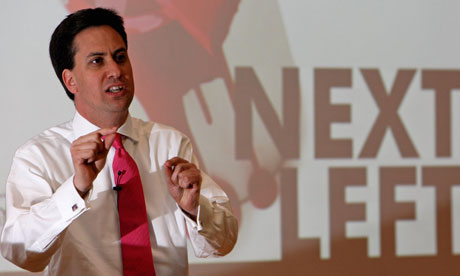
Really, Ed, really?


“Same old taxes, same old Tories”. Ed Miliband’s response to the chancellor’s “budget for growth” last week was characterised by an aggressive, knowing ennui. It was as if Miliband had cast himself as an aging prima donna reclining on a (red) velvet chaise-longue, warning her child away from an only seemingly reformed no-good suitor. “I know what they’re like, you know what they’re like”, he seemed to be saying. Don’t be fooled by “friendly” George’s marriage proposal, also known as his budget for “growth”. He’s still the same man who stole your money to buy a dead puppy as a present for your sister.

The presumption Miliband and his speechwriters are making is that we do know what the Conservatives are like; that we will easily remember what they’re like if we cast our collective minds back to 1997 when they were last in government (or when they last proposed to us, depending on how long this analogy can be dragged out). This message was clearest during one of the speech’s defining moments, in which, against a supportive background of taunts and cheers from buoyed-up Labour ministers, Miliband described Osborne as embodying the “hubris and arrogance of the early 1990s, the same broken promises…he’s Norman Lamont with an iPod”.

Big words. In fact, pretty funny words, if you know who Norman Lamont is. Presumably the majority of MPs can remember, but during the time of the last Tory government I personally was more interested in learning to read and tie my shoes up unaided than in keeping abreast of party politics. That’s not to say that it takes longer than three seconds to google Norman Lamont, but, in terms of making what should be an easy appeal to an increasingly large base of dispossessed young voters whose political consciousness wasn’t fully formed during the 90s, he shouldn’t think that “same old Tories” hits hard without proper explication. He can’t assume that we all have politics degrees, particularly now that nobody can afford a degree.

Of course, for every potential young Labourite for whom “classic Tory con” means at least a week in the (soon-to-be-closed) library, there are many more who internalised Thatcher-hatred, if not Major-hatred, with their mother’s blissfully unsnatched milk.

Neither should Miliband focus only on the young to the exclusion of anybody born before 1970. But if the point is to win over those wavering in their support for the coalition, he should consider that reiterating that the Tories haven’t really changed speaks only to those who were won over by Cameron’s “progressive Conservatism” election campaign. Nobody who has read a newspaper in the last year can be fooling themselves that there is anything progressive about this government’s programme.

Miliband needs to find more imaginative ways to convey more clearly exactly what the broken promises and economic deceits of this government are. A great example of this in his anti-budget speech was the line he nicked from the institute of fiscal studies, that the budget gives with one hand, and “takes away with lots and lots of other hands”. This calls to mind an illustration of the government as an amorphous, ACME-white-gloved-hands machine which is figurative enough to give some substance to figures about fuel duty drops and VAT rises. The slogan “too far and too fast” is also relatively credible, however much it sounds like an adolescent sexual encounter, or the working title of the misogynist car-chase film The Fast and the Furious.

As well as pointing out what the problems with Tory-Lib Dem policy are, a better, clearer explication of Labour’s economic alternative to the “budget for growth” would be most welcome. Indeed, the huge support that resulted in at least a 250,000 person turn-out for the march for the alternative is not at all surprising. It is clear that if there are alternatives. We want to hear about them, and we want to hear about them in a detailed, extensive, well-publicised way, preferably published in the form of a weighty tome that can be used for the purposes of hitting Nick Clegg.

“Same old Tories” preaches only to the converted. In a time of opposition, this is not enough.

Sunday, 13 March 2011

Sisterhood is not dead. It is alive and kicking and living in Labour

Article first published on Labour Uncut: http://labour-uncut.co.uk/2011/03/13/sisterhood-is-not-dead

Hattie being pretty fly


As a relatively new Labour party member, attending the annual women’s conference – celebrating the centenary of international women’s day – was a first insider’s foray into the challenges discussed by women in party politics. The day seemed to structure itself: talks could hardly do anything other than concentrate on the systematic attack on women that is Tory-Lib Dem policy, and women’s continued under-representation in government and politics. It doesn’t take much to connect these two themes. More surprising, though, was an explicit focus on sisterhood. Throughout the day the speakers repeatedly entreated the audience as “sisters” to support pro-women initiatives. Though there was little open reference to feminism and feminists, barely a scratch on the surface of the conference was needed to reveal the underlying message: sisterhood is still powerful.

This is big news because even recently it hasn’t seemed that way. Only two years ago, Harriet Harman proposed a policy at the time so revolutionary, so unthinkable, that a riotous queue (with John Prescott at the head) formed, its sole purpose to decry her suggestion as self-serving nonsense. What was the proposal? Only this: that never again should Labour leadership be a male-only province. Rather, the leadership should always be comprised of one man, one woman, whether this be a male leader and female deputy leader, or vice versa.

Of course, Harman is no stranger to vitriolic demonisation from all branches of the media. When, during her time as acting leader, she suggested that we, you know, stop skirting around the endemic problem of domestic violence and start educating children about relationships, booming derision and shouts of “man hater”! echoed from Parliament Square to Aberdeen. This, after all, is only Britain’s currently longest continuously serving female MP, who, arguably, has done the most of anyone in Parliament to push gender equality policy in Britain over the last twenty years. Why should anybody take her seriously?

On Saturday, it seemed that, at least within the women’s side of the party, the side of the party, after all, on which feminist policy most directly impacts, the support for a full and active sisterhood is there. This was reflected most obviously in multiple paeans to Harman’s work, with the other speakers (most of whom have much to be congratulated on themselves) each taking the time to express their support for Harman and her dedication to gender equality.

During her speech, Harman made clear that she has not changed her mind on male-only leaderships, and the audience nodded agreement. Another of her proposals was for a senior position for a women’s organiser. It wasn’t entirely obvious whether this would comprise an additional women’s (as opposed to the broader “equalities”) minister position, or an official recognition at a high level of a Labour women’s leader, or a bit of both. Either way, seven hundred Labour women (and the few men present) were overwhelmingly supportive.

In previous years, considerable numbers of feminists, both female and male, argued that continued demonstrations of female merit and changing cultural attitudes are all that is needed to create a steady increase of women in ministerial positions. The predicted increase has not occurred. It is worth bearing in mind that it is positive discrimination that has enabled 31% female Labour MPs, more than all of the other parties put together. Whatever past reservations may have been expressed about all-women shortlists and other kinds of quotas, there was a feeling in Saturday’s audience that the bluntest tool is better than no tool at all.

It seemed that Ed Miliband’s Labour wants to be seen to be really doing something to tackle the continuing under-representation of women in government politics, and that the call out to women as sisters was intended to stimulate a renewed focus on women’s power as a group, however differentiated by race, class, sexuality, or ability.

How is the political will to increase women’s representation in politics created? Last Saturday, the answer was clear and resounding. It will be the action of women themselves that finally succeeds in transforming the attitudes that still bar women from representative participation in government politics. The sisterhood is by no means dead, and more, unabashed, entreaty to the power of sisterhood is what it will take to create the kinds of political environments that at the conference had women lining up five to a mic to express their opinions. As Harman said in her opening address, “today’s unreasonableness is tomorrow’s justice and conventional wisdom”.

Thursday, 24 February 2011

Positive discrimination: only the best for the board (you can quota me on this one!)

2011: A corporation near you


The majority of people do not believe that gender or race is more important than merit when it comes to getting a top job within the lofty heights of a corporate company. The majority of people* believe that merit is the name of the game. Contrary to what is often casually asserted, the people who don't believe purely in merit are not those people who believe in positive discrimination, but rather, the people who are sexist, racist, homo/transphobic, or ableist. Why? The answer is one that seems blindingly obvious: if pure considerations of merit were behind promotions to top positions, demographic distributions across company boards would be roughly representative. But they aren't, and more, they aren't really getting any better. The 'Women on Boards' review, released today by Lord Davies (link below), found some pretty damning statistics on the question of women's participation on boards in FTSE 100 companies, but stopped short of recommending quotas, suggesting rather that companies take active steps to reach mountainous targets such as 25% female representation on boards by 2015.

In fact, his recommendations seem quite good, but as Julia Finch pointed out in Women directors: why I've changed my mind, these are 'recommendations' to the same companies who are also made 'recommendations' to about acting ethically, regulating trade fairly, not causing financial crises, not fucking people over generally, and so on. That kind of speaks for itself.

On the topic of women on boards, there are several oft cited reasons why we have not yet reached gender-balance. Number one, company boards aren't representative because female candidates are invariably less good than male candidates. If women candidates are chosen who are less good than the male candidates they are up against, it is patronising to women, unfair to men, and bad for business overall. Number two, company boards aren't representative because feminism only started forty or fifty years ago, and it will take a while for women growing up during the golden era of the second wave to filter their way through to the top jobs. Number three, women don't get the top jobs because they don't really want them as much as men do. Women would rather leave to raise families, spending time on greater, purer pursuits than the mindless accumulation of empty, soulless, capitalist money and power. Women just don't like being CEO's! Everyone's a winner!

On this first point, on occasions when I have spoken to professional women about, for example, introducing quotas for women in top positions, the overwhelming response has been that it would not only be wrong but that it would create an unpleasant atmosphere within companies if it were known that a female candidate had been promoted to fulfill a quota, rather than on her own merit. Women I have spoken to, quite fairly, want to feel that they have climbed the corporate ladder by themselves, because of their own achievements, rather than because of some political drive to introduce equalities legislation. I understand this feeling. Nobody wants to get a job they don't deserve. Yet implicit in this argument is the premise that a quota for women would inevitably sometimes result in better men being passed over for inferior women.

Well, yes. Where there are quotas for female promotion and inclusion at higher levels, it is at least feasible that sometimes a more qualified man will lose out to a less qualified woman who has to be promoted because of the quota. But right now more qualified women are losing out to less qualified men, to the point where only 12.5% of FTSE-100 directors are women, where 50% of FTSE companies do not have even one woman on their board , and where there has been little improvement on this for years. We either have to argue that this represents only considerations of merit, and that men are just much, much better than women (sometimes known as misogyny), or we have to admit that the playing field isn't level, that it isn't getting better by itself, and that we are not going to have approximate equality unless some action is taken to get women onto boards. I for one find it highly unlikely that a 30-40% quota for women on company boards will very often lead to anti-male discrimination, simply because I do not believe that male candidates are better than female candidates. To my mind, if such a quota were enforced it would more often than not simply result in promotions for the equally-qualified women candidates who currently don't get promoted. Because currently the system is sexist, you know?

This brings us to the second argument, above. It's often argued that as girls now do better than boys at school, and that as half, if not more, of university graduates are now women, it will just be a matter of time until those proportions even out with a roughly equal spread at the top. Arguably, the forty years or so since the second wave are not long enough for women growing up in the 70s to have reached company boards. Touching as the faith in feminism's power of those who argue this is, it would surely only apply if feminism had already been completely successful. Though equal rights legislation is much improved, it is by no means perfect, and sexism is by no means gone. All people, to some extent, have internalised the norms of a society which has certain preconceptions about roles for men and roles for women. One only needs to watch The Apprentice, source of all my knowledge about business, to see that the qualities which seen to be apt for business are most often masculine ones, and only seen as such in male-bodied people. Confidence, drive and intelligence in men are read as aggressiveness, coldness and over-opinionatedness in women. Whilst much can be done socio-culturally in order to combat such ideas, it seems to me to be rather putting the cart before the horse to say that as feminism progresses and attitudes change women will get through to the top ranks. Rather, women need to be there to effect the change, and positive discrimination, to my mind, is the only way that this will genuinely happen.

On to the third point. Often this argument about most women just not wanting to give up their lives to moneymaking is seen on Comment is free, and other such reputable forums for debate. Of course, any essentialism about women's and men's intrinsic natures is pretty objectionable, and it's all rather convenient that women are supposed to happen not to want to succeed in the same way that men want to, when they currently aren't succeeding in that way. This is the point where the old 'children' chestnut gets brought in - if women will insist on taking time off to have babies and look after them and such like, how is it fair that they can be at the same corporate level as a man who hasn't done so? Any logic behind the notion that extending paternity leave to be equal with maternity leave will hurt the economy is mindbogglingly absent, unless it is assumed that men will always have higher positions than women. Though women, for obvious reasons, have to do the actual birth, there is no reason that childcare should not be shared equally, and indeed, the advantages men will gain from legislation for a fuller fatherhood will only be balanced by the concurrent removal of discrimination against women who want to have children. Sweden has it better than us in legislating for a minimum two months paternity leave (Dads in the UK only have two weeks), and its worth pointing out that their economy has not yet collapsed in any greater way than ours has.

There is still a considerable amount of misogynist prejudice in society, both obvious and latent. Right now, what we have is discrimination overwhelmingly against women, and where there are completely fair examples of areas in which men face discrimination, it is clear that when women make up less than negligible% of top corporate jobs, a very serious prejudice still holds fast. When no progress is being made otherwise, positive discrimination needs to be enacted to right the balance. Not to tip it over to the other side, but just to even the currently uneven grounds. More problematic than the notion that a hostile atmosphere will result from this is the implication that there is not currently a hostile atmosphere where massive injustice is being doled out. Bear in mind that even if a 30-40% quota system were introduced, sometimes stronger women would still be passed over for weaker men (because 60-70% would still be on a non-quota basis, in a still sexist society). But if nothing is done to create change, little will ever change.

Incidentally, I google image searched 'women sitting in boardroom' to find a picture for this article, and it came up with, 'Did you mean 'woman sitting in boardroom'. Telling?

*I know this because I have conducted an extensive survey which involved personally speaking to the majority of people.


More to read:
- Lord Davies' report: http://www.bis.gov.uk/assets/biscore/business-law/docs/w/11-745-women-on-boards.pdf
Related Posts Plugin for WordPress, Blogger...