Sunday, 17 April 2011

Princess Kate’s reality TV wedding


Article originally published at The F Word: http://www.thefword.org.uk/features/2011/04/princess_kate_royal_wedding


Leave me out of your utterly banal "happy national celebrations", kthx bye.

“It would be extremely unwise of anyone to try and spoil a happy day of national celebration.” - Boris Johnson, feminist icon

Once upon a time, in the far away land of Berkshire, a beautiful little girl called Catherine was born to the nouveau riche Middleton family. As she grew older, she would sit by a wishing well, singing daintily to the mysteriously sentient birds that clustered there. It is said that proletarian residents of the Middletons’ village would hear strains of ‘Someday my prince will come’ floating over the wall of the house where little Kate was confined. Very shortly after Kate began singing about wanting a prince to rescue her from her debilitating solitude, he appeared. Aside from a few minor dwarf-oriented subplots, they were soon conjoined in holiest matrimony and lived happily ever after.

Wait, now I come to think about it, that might be the basic plot of Disney’s Snow White and the Seven Dwarfs, released in 1937. Nowadays, Disney heroines are very slightly less a misogynist’s wet dream, but you could be forgiven, after reading much of the media coverage of the forthcoming royal wedding, for thinking 1937 has come again (hopefully much like Snow White’s prince. And Snow White, obviously. I do hope that they both managed to come regularly during their happily married lives.)

Fictional characters’ orgasm frequencies aside, the media build up to the royal wedding has slowly but surely lubricated the royalists’ clunky marketing machine, as a result of which Kate Middleton, a rich and privileged but otherwise normal person, is re-branded as the central figure in an odd sort of fairy parable. Allusions to this archetypal story in which a peasant woman marries a prince and becomes a princess buttress the lurid media coverage. The objectionable assumption is that the archetype still has the power or relevance to transfix the nation’s imagination.

The sheer relentlessness with which attainment of princesshood is being presented as both desirable and admirable is frankly a little bit sickening. I’m under no illusions about the number of people who keep the radical feminist analysis of prince/princess mythologies that is Andrea Dworkin’s Woman Hating under their pillows (if you are one of these people please call me). But one doesn’t have to be a die-hard Dworkinite to recognise every story reporting on some irrelevant minutiae of the wedding’s organisation, and every scare about ‘anarchists’ targeting the national celebrations, as more grist to the mill of the whole gender-role-pushing, vulgar, money-spinning bandwagon.

Imagine strong, handsome, ruddy-cheeked Prince William giving up his job as a helicopter pilot to marry a prince (or a princess of the kind that is actually heir to a modicum of state power, even as figurehead)

On many accounts, Kate has given up her previous career, at least for the build up to the wedding, in preparation for the onset of princessness. It would be unfair to simply blame her for this. I can only imagine what kinds of pressures she may be under to conform to what is expected. But at the same time, I have not really seen any journalist challenge the seemingly foregone logic that marrying a prince primarily entails a full-time role as official princess.

The implication is that subsequent to the marriage, Kate’s career will be distinctly secondary, that really, her subsequent career will be ‘princess’. It is as if the title confers a difference in kind on its grateful acquirer, once merely mortal, now passively reified, admitted to the sacramental circles of the blue blooded.

As far as I can make out, the role of someone who is only a princess by virtue of marrying a prince is this: a prince’s wife, a mother to heirs, an attender of state functions, perhaps with some occasional token charity work. William will not give up his job as a helicopter pilot, nor is it suggested that he should.

Extrapolating from the favourable media reports that William asked Kate’s dad’s permission for her hand, we might be able to just about deduce that this is no modern, feminist marriage. As if Kate’s dad owns her hand, or any other part of her. A recent ‘big story’, that William will not wear a wedding ring, though Kate will, is further icing on the cake of their royally betrothed power dynamic. Unlike William, Kate will be defined merely in virtue of her marriage - something utterly antithetical to the great strides feminism is supposed to be making into the upper echelons of institutionalised sexist tradition.

Equal celebration and denigration of woman-only-as-wife are still rife in much, if not most of the national media. One needs only to contrast the considerable coverage allotted to, for example, male politicians and footballer’s female partners, with the relative obscurity of female politicians and footballers, to see this. Some writers seem to consider the right to free speech as a go-ahead for an insidious misogyny which threatens to force traditional gender roles down our throats until we stop muttering nonsense about women being human too, or whatever. The media’s wholehearted advocation of Kate Middleton as being successful, more successful than those other women who only do things like conflict resolution or working on a cure for cancer or sitting on the board of a company, is not just sexist and retrograde, but also slightly surreal.

At stake here, however, is not just the idea of woman as wife, but a specific instantiation of a riches-to-aristocracy princess mythology. Princess Kate is good, kind, beautiful, well-mannered and passive, like all fairytale princesses. What Catherine Middleton is actually like as a person is irrelevant to the story we are being sold.

The trick here is to imagine the gender roles the other way round. Imagine strong, handsome, ruddy-cheeked Prince William giving up his job as a helicopter pilot to marry a prince (or a princess of the kind that is actually heir to a modicum of state power, even as figurehead). Imagine that it is assumed he will spend much of his time henceforth raising heirs, being beautiful, going to parties and dressing well. Can you imagine this happening? I can’t. The maintenance of polarised binary gender is well and truly alive within the royal wedding’s national narrative. Kate might as well stock up on pink, glittery princess outfits from the Disney store right now, preferably from a range that does matching mother and daughter dresses (though perhaps she will hope for sons until such time as the UK sees fit to overturn male-preference primogeniture laws).

The promotion of stereotypical gender roles is blatant, but other, less conspicuous assumptions support the credulous, glowing media reports. One such assumption is that even though our society is ostensibly just about OK with homosexuality, unmarried cohabitation, non-monogamous couplings and so on - what we really should all still be aspiring to is Wills and Kate’s ideal, heterosexual marriage between young, attractive, rich white people in a church. This is marriage’s ultimate Platonic form, the reporters seem to be implying, this is what you should all aspire to. We understand that not everyone can marry their Prince Charming, but by god we should be trying to. If we can’t bring ourselves to completely renounce our wicked, sinful, fornication-outside-of-holy-matrimony ways, then we should at least pretend to be buying into the culture that supports the opposite.

Indeed, buying is the operative term. Feeding into the royal wedding’s unsubtly enforced premise of national celebration, is, of course, an unabashed assumption that we will consume as we are told. Look at how happy the nation is on this wonderful day! Buy this poorly designed tea towel! Here, have a mug as well! Not lucky enough to be invited to the special event? Oh well, cheer yourself up by pre-ordering an official commemorative coin! Even the kingdom’s peasants can take away some Wills & Kate merchandise.

Aside from being entirely revolting in itself, the furore around the royal wedding provides a current on which those with a vested interest in making money out of selling sexism can ride. One example are the odious Princess Prep classes, advertised with the tag-line ‘All little girls dream of becoming a princess’. This summer school is provided to girls (and only to girls) too young to have much developed their capacity for analytical engagement with the implications of the activities on which they are enrolled. I can’t help thinking that if the girls attending princess classes are not at the same time provided with the critical tools to make up their own minds about whether the stifling docility of the princess role is for them, it is a form of, at least… severely questionable teaching.

Even for those, both young and old, who escape such official indoctrination, the internalisation of such retrograde ideas about gender is tough to avoid in a cultural climate which is currently doing its very best to promote moral admiration of the heterosexist ‘Wills & Kate’ ideal.

This is a reality TV show wedding. It’s a little surprising that Modern-Day Princess™: Kate’s Big Day Approaches, “a fly-on-the-wall show following Kate Middleton as she prepares for the greatest day of her life”, hasn’t yet been made. The unremitting marketing, merchandising and the promotion of a sexist status quo that underpins it all is everything that might be associated with the crass value system of reality TV. The Guardian’s April Fools’ joke, that they would be running a 24-hour live blog of all the preparations from 1 to 29 April, was spot on. But I, for one, am not buying it.

Wednesday, 13 April 2011

What values should govern, what’s the use of higher education, and when can we start liking Nick Clegg again?

Originally published at Labour Uncut: http://labour-uncut.co.uk/2011/04/13/what-values-should-govern-what’s-the-use-of-higher-education-and-when-can-we-start-liking-nick-clegg-again


From Urban Dictionary: 'To Clegg is to betray everything you once stood for in a dash of opportunism and stupidity.'


The Liberal Democrat spin machine has gone into overdrive during the last week. Nick Clegg’s sympathetically candid interview in the New Statesman seems almost like the beginning of a public rehabilitation. The message seems to be that we’ve torn him down, and now, in time honoured media tradition, it’s time to build him back up again. Even the Telegraph’s take on the interview, beneath with the ostensibly mocking headline, “I cry to music and even my sons ask why everybody hates me”, inspires a quick flicker of – what is it – guilt?

The question arises, are we justified in continuing to hate everything Nick Clegg represents, or have we turned into massive playground bullies, continuing to flush our victim’s head down the toilet?

Almost a year into coalition government, it is still worth holding onto the memory of those Liberal Democrat manifesto pledges, embodied by Nick Clegg, that led to a barrage of student protests, vociferous journalistic bile, effigies on bonfires, and his own set of entries in Urban Dictionary. Nobody who can understand that £27,000 is a ludicrous amount of money for three years of lectures and library access will forget the tuition fees betrayal in a hurry.

On the other hand, the commodification of higher education wasn’t cooked up solely by this government. The infamous, idiotic Browne report, leading to the decision to officially mandate university courses solely according to the market-governing value, economic “use”, was commissioned by Labour. It was Peter Mandelson’s hand on the helm when the initial push came for the reconceptualising of degrees as useful business contracts meted out to student-customers paying through their tightly clenched teeth for the privilege. “Listen, professor, I’m paying for this degree: now explain to me how this ‘Beauvoir and existentialism’ essay will be directly relevant to changing demands of the job market (none of this ‘transferable skills’ bullshit), or I’m buying a different course”.

Most damagingly, it was under Labour that the higher education department was moved into the business department, foreshadowing this government’s “reforms”. Accusing the Tories and Lib Dems of acting “ideologically” is one of Labour’s better catch-phrases of the moment. As Dominic Lawson points out in the Independent, most people believe that acting according to ideology is a bad thing. But Lawson is wrong to argue that Labour’s assertion: “the Tory cuts are ideological”, is an accusation simply of Thatcherism, or one borne out of jealousy. Rather, it is the quite fair charge that the Thatcher-esque policies of the Tory-Lib Dem government are being enacted dogmatically, that they are not supported by the available evidence.

That is why it is important that we continue to fight for higher education to be seen as good for other reasons than economic utility. Without graduates in the arts, humanities, and social sciences, we will not know what it is to speak of other values than use; we will not know anything of the philosophy behind politics, nor of politics itself. We will not know why it is important that we should know these things. Without an understanding of these ideas, the ascendant ideology of economic utility will go unchallenged.

We have already seen a concentrated assault on the idea that as far as governing values go, if you can’t easily quantify it, you should get rid of it. If use is the only value we admit of, we will not know that it is just one black and white, up and down, right and wrong field of thought – in a politics that should rightfully admit of grey.

Tempting though it is to hate Nick Clegg’s guts until the end of time, the reality is that he probably isn’t the arch-villain we would like to think he is (that sentence was very difficult to type). He did deliberately canvass the student vote on a policy that he never intended to keep, but he probably isn’t completely evil. Like Darth Vader, there might be some good left deep inside him, in spite of the fact that he would condone building a massive Death Star with which to destroy higher education, the welfare state, the public sector, our rich artistic culture, and everything else that is valuable.

Yet, somewhere, there must be some good in him, after all, he does cry alone in his room while listening to music, and what Radiohead fan doesn’t understand that?

Thursday, 31 March 2011

The topless Miss Salley and 825 double standards

Page 3 of yesterday's Evening Standard was a pioneering exercise in journalistic integrity. It seems that topless pictures of an art teacher named Miss Salley had been spread among students at Harrow, a public boy's school. The coverage dwelled simultaneously on Miss Salley's distress at the sharing of the pictures among pupils, and her status as a former model and 'Miss Ireland'. In other words, first, Miss Salley is a woman for whom having topless pictures is just about understandable (as models do that kind of thing). Second, because she is sexy it is understandable that the boy that found the pictures passed them around to his friends, who passed them around to their friends, and so on (because young humans with penises naturally do that kind of thing). Third, because she was upset, she was slightly redeemed. Slightly.


Harrow School boys, possibly not the bullies in question


The articles in the Evening Standard, Daily Telegraph, and (unsurprisingly) the Daily Hate could have been broken down in this manner:

1. LOOK AT THIS PICTURE OF A HOT SMOKING WOMAN!
2. Guess what happened, another teacher took some pictures of her with her tits out and all the boys saw! How shameful!
3. But it's ok, she isn't a slut, she's actually a model and they were artistic photos.
4. Also, boys at the school confirm that she is sexy. For example, one eloquently described her as a 'total babe'!
5. And don't worry, she repented. She was really upset and had to go home. Natural balance restored!
p.s. She used to go out with a rugby player!

The reasons why this story is abhorrent are almost too numerous to count. It is not just that we are supposed to look upon the schoolboy's behaviour as naughty yet permissible, it is that at the same time we are encouraged to find it all a bit titillating - reinforcing the idea (as if it needed reinforcing) that a woman's sexual shame is erotic, and that more, female sexuality is in itself shameful when not officially mediated by male permissions. In this story, the story of many women and girls, Miss Salley is the one shamed for sluttishly allowing a semi-naked representation to be taken of her, to be stolen by others. She redeems herself only by being attractive, and by being rightfully upset when others find out what she has done. Heaven help Miss Salley if she is ugly, or if she dares to not recognise her shame. This story has been told a million times and it is rarely, if ever, questioned, particularly not in the schools where it so often takes place.

I will always remember the multiple ways in which girls at my school were sexually bullied. On just one of the many occasions I could pick from, I remember hearing a conversation about the existence of a video of a girl fellating a boy in a toilet. Apparently whilst this was going on the boy's friends had taken the video over the wall of the toilet door. Just rumours about this video were enough to make me feel shocked at the temerity of the girl in question, and thoroughly embarrassed for her. What was she thinking, to give a boy head in a toilet?! How bad she must feel! What a slut! I would never do anything so base! The idea that if she should feel ashamed, the boy receiving head should also feel ashamed was never even mentioned. Nor, for that matter, was it seen to be at all embarassing or shameful to be hanging over a toilet stall door video-ing a couple having sex.

Lets take it as read that there is a massively gendered heterosexual double standard at play here, presenting the idea that it is in some way shameful to give head, but not shameful to receive it. Aside from this, it is highly strange that at no point in teenagers' lives does anybody usually sit them down and explain that this is wrong.

(Imagine you are sitting in a class full of thirteen year olds. Your teacher, a Miss Jean Brodie soundalike, stands up and says this): 'Contrary to everything else you will have probably have learned from films, television, books, parents, friends, and other aspects of our society, it is normal and ok for people to have sex. Women are not sluts for having sex, nor are they prudish for not having sex. Men are not studs for having sex, nor are they losers for not having sex. It is ok to have sex, or to not have sex. Anybody who uses the word 'slut' will henceforth be called to the Head's Office (ha) for a full explanation of their actions.'

In my feminist utopia, this lesson is read instead of morning prayers. Except, this doesn't happen, and instead sexual bullying happens time and time and time again. Obviously girls will take naked images of themselves to send to boyfriends, or friends, when the most prevalent, obvious outlet for burgeoning sexual desire is misogynist heterosexual porn, and when there is no education to suggest otherwise. Whilst young people are growing and developing their sexualities, there is little to nothing taught about gender equality, about sex being compatible with humanity, or about sex being positive and normal. Waving a condom around during one biology class is not sex education.

At what point do we begin to question where the blame really lies? Is it on the woman who experiences her sexuality in such a way as to create a naked image, or is it on a cultural attitude to the female body and to female sexuality which sexualises, commodifies and controls, whilst also blaming, shaming and denigrating? It is scandalous that the British education system is still too embarrassed, too naive, or too outright sexist to talk about sex and relationships to those who need to hear about it most. How long will it be seen as better for sexual bullying, rape, domestic violence and male-centric sex to prevail than for teachers to spend a bit of time teaching children what they don't learn elsewhere?

Here, to my mind, is how the story should have been reported:

1. Picture of public school boys.
2. Boys at Harrow public school were suspended today for attempting to bully a teacher, sexual shaming and property theft.
3. This kind of thing really shouldn't happen any more. How unfortunate. Why weren't those students educated better?
4. X, the photography teacher whose photos were stolen, is pressing charges.
5. We hope that prestigious Harrow school will recover from the shock of such behaviour, and implement better education to make sure it won't happen again.

Monday, 28 March 2011

"Same old Tories" doesn't tell me much

This article was originally published on Labour Uncut: http://labour-uncut.co.uk/2011/03/28/same-old-tories-doesnt-tell-me-much/#more-8605

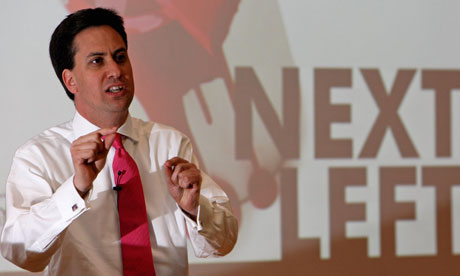
Really, Ed, really?


“Same old taxes, same old Tories”. Ed Miliband’s response to the chancellor’s “budget for growth” last week was characterised by an aggressive, knowing ennui. It was as if Miliband had cast himself as an aging prima donna reclining on a (red) velvet chaise-longue, warning her child away from an only seemingly reformed no-good suitor. “I know what they’re like, you know what they’re like”, he seemed to be saying. Don’t be fooled by “friendly” George’s marriage proposal, also known as his budget for “growth”. He’s still the same man who stole your money to buy a dead puppy as a present for your sister.

The presumption Miliband and his speechwriters are making is that we do know what the Conservatives are like; that we will easily remember what they’re like if we cast our collective minds back to 1997 when they were last in government (or when they last proposed to us, depending on how long this analogy can be dragged out). This message was clearest during one of the speech’s defining moments, in which, against a supportive background of taunts and cheers from buoyed-up Labour ministers, Miliband described Osborne as embodying the “hubris and arrogance of the early 1990s, the same broken promises…he’s Norman Lamont with an iPod”.

Big words. In fact, pretty funny words, if you know who Norman Lamont is. Presumably the majority of MPs can remember, but during the time of the last Tory government I personally was more interested in learning to read and tie my shoes up unaided than in keeping abreast of party politics. That’s not to say that it takes longer than three seconds to google Norman Lamont, but, in terms of making what should be an easy appeal to an increasingly large base of dispossessed young voters whose political consciousness wasn’t fully formed during the 90s, he shouldn’t think that “same old Tories” hits hard without proper explication. He can’t assume that we all have politics degrees, particularly now that nobody can afford a degree.

Of course, for every potential young Labourite for whom “classic Tory con” means at least a week in the (soon-to-be-closed) library, there are many more who internalised Thatcher-hatred, if not Major-hatred, with their mother’s blissfully unsnatched milk.

Neither should Miliband focus only on the young to the exclusion of anybody born before 1970. But if the point is to win over those wavering in their support for the coalition, he should consider that reiterating that the Tories haven’t really changed speaks only to those who were won over by Cameron’s “progressive Conservatism” election campaign. Nobody who has read a newspaper in the last year can be fooling themselves that there is anything progressive about this government’s programme.

Miliband needs to find more imaginative ways to convey more clearly exactly what the broken promises and economic deceits of this government are. A great example of this in his anti-budget speech was the line he nicked from the institute of fiscal studies, that the budget gives with one hand, and “takes away with lots and lots of other hands”. This calls to mind an illustration of the government as an amorphous, ACME-white-gloved-hands machine which is figurative enough to give some substance to figures about fuel duty drops and VAT rises. The slogan “too far and too fast” is also relatively credible, however much it sounds like an adolescent sexual encounter, or the working title of the misogynist car-chase film The Fast and the Furious.

As well as pointing out what the problems with Tory-Lib Dem policy are, a better, clearer explication of Labour’s economic alternative to the “budget for growth” would be most welcome. Indeed, the huge support that resulted in at least a 250,000 person turn-out for the march for the alternative is not at all surprising. It is clear that if there are alternatives. We want to hear about them, and we want to hear about them in a detailed, extensive, well-publicised way, preferably published in the form of a weighty tome that can be used for the purposes of hitting Nick Clegg.

“Same old Tories” preaches only to the converted. In a time of opposition, this is not enough.
Related Posts Plugin for WordPress, Blogger...